

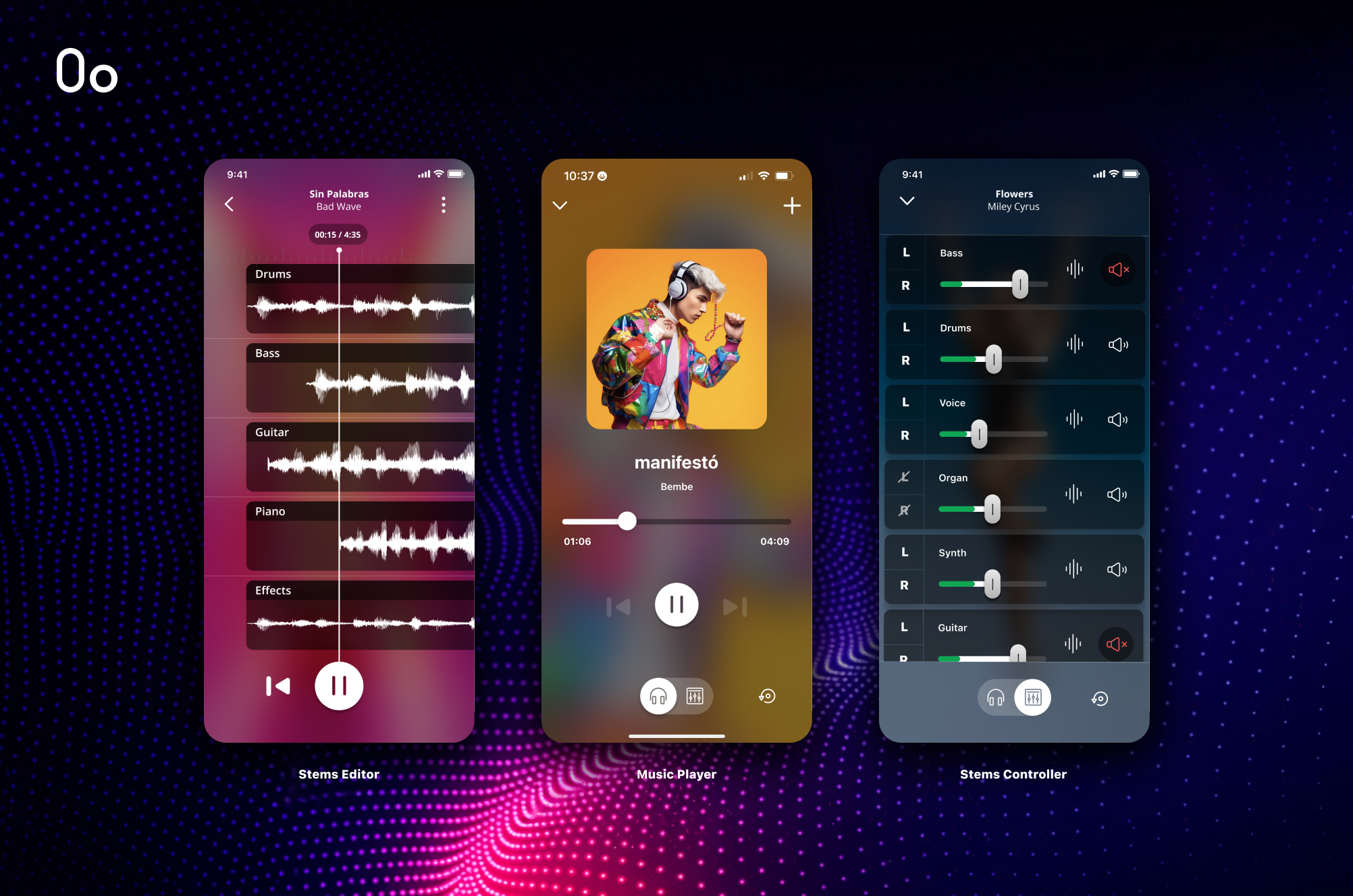
Ounda App - Stem Music Player
Ounda is an iOS stem-based music player that lets musicians distribute interactive albums directly to fans while retaining control over their master recordings. As the end-to-end Product Designer, I translated a broad product vision into a focused Version 1 by defining core user needs, prioritizing essential workflows, and applying progressive disclosure.
The product launched in beta in 2023, with 87% of beta users demonstrating an understanding of its purpose and how to use it.
The Context
Ounda began with a broad vision for making music more interactive. Musicians wanted greater control over how they shared their work, producers saw opportunities to manipulate individual audio stems, and listeners wanted to experience music beyond traditional playback.
Each audience saw a different opportunity, but the product lacked a single, clear entry point. As new ideas and features accumulated, defining a focused initial experience became essential.
My responsibility was to translate that vision into a clear product direction and define a Version 1 experience that users could understand immediately while leaving room for future growth.
The Problem
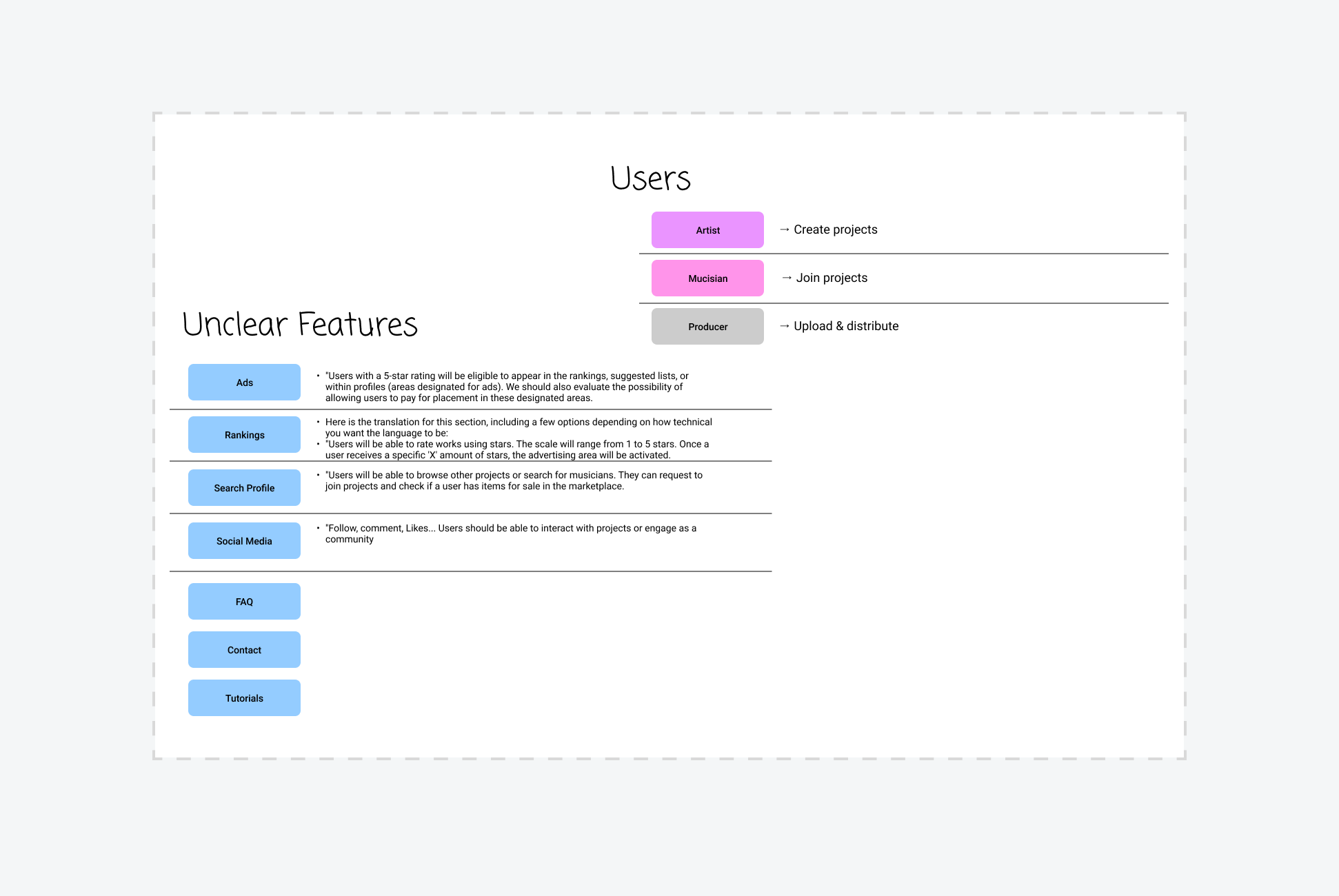
The initial product vision was ambitious, but it tried to serve musicians, producers, and listeners without clearly defining the primary experience for each group.
This created three risks:
Users struggled to understand the product's core purpose.
Investors and collaborators had difficulty understanding the business objective.
Feature discussions continued expanding the scope instead of clarifying the MVP.
The core challenge was product focus: deciding what to include in Version 1, what to simplify, and what to leave for future releases.

My Role & Ownership
I owned end-to-end product design from early concept through beta launch, collaborating with a project manager, a music producer, and a six-person engineering team.
My responsibilities included:
- Leading qualitative user research and synthesizing insights.
- Defining product direction and prioritizing the MVP.
- Designing user flows, wireframes, and interactive prototypes.
- Establishing the UI system and reusable interaction patterns.
- Conducting usability testing and validating the core experience.
- Collaborating with engineering to support implementation.
My primary focus was to reduce product ambiguity, manage scope, and translate the original vision into a coherent Version 1.
Research & Key Insight
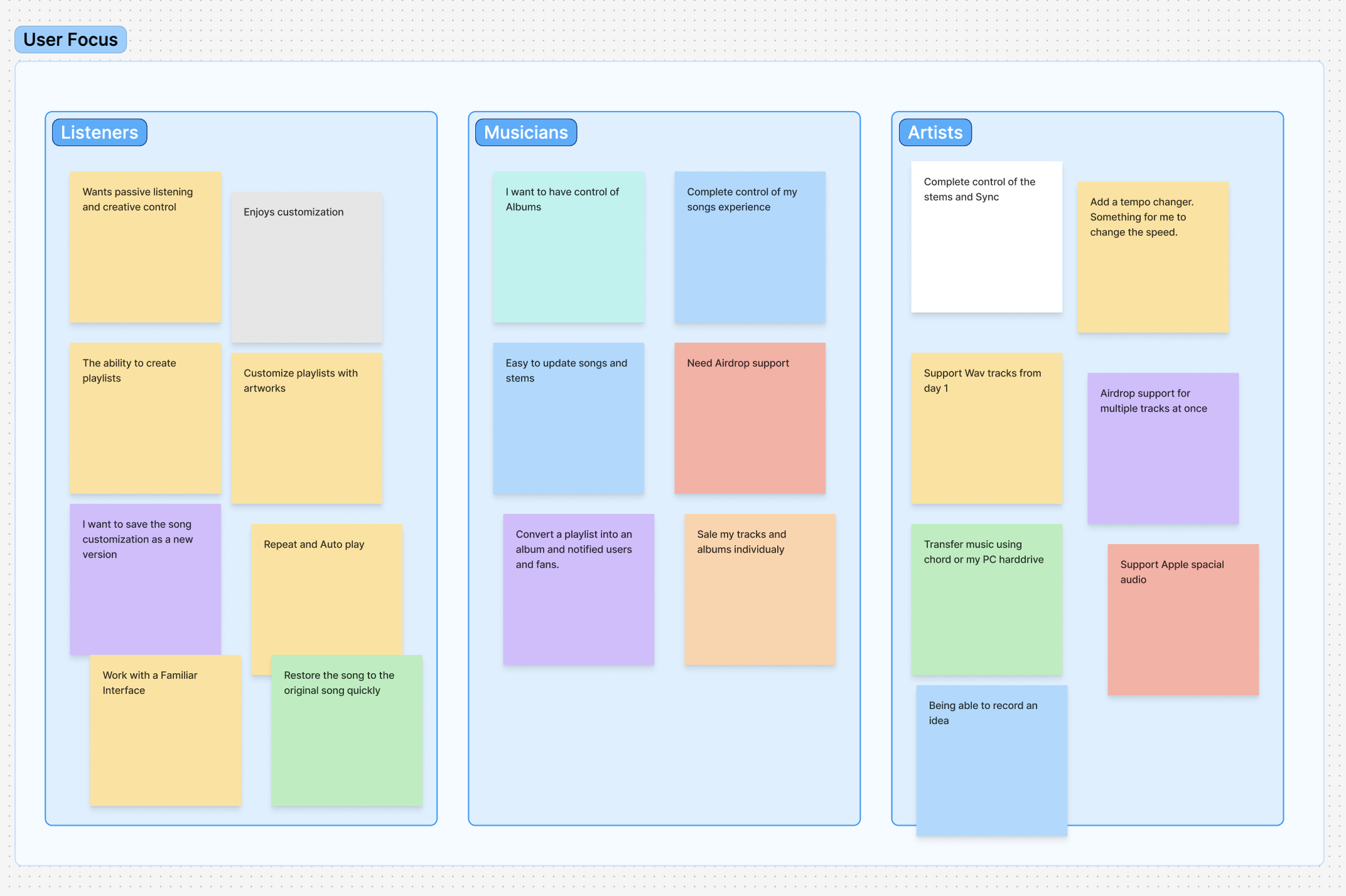
I conducted exploratory qualitative research with seven to eight participants across three groups:
2–3 musicians
2 music producers
3 listeners
I asked participants about their current music platforms, their existing workflows, their frustrations, and what they wanted to do differently.
When participants reviewed early concepts, each group understood a different part of the product. The overall vision generated interest, but the number of capabilities made it difficult to understand where to begin.
Key insight:
The primary challenge was not simply feature usability. It was cognitive overload caused by introducing too many possibilities before establishing a clear core experience.
This insight informed the decision to narrow the initial scope and prioritize the workflows that defined the product's core value.
These exploratory findings informed the decision to narrow the initial scope and prioritize the workflows that defined the product's core value.
Design Strategy
I used progressive disclosure as the core design strategy for Version 1. Instead of exposing every possible capability at once, I prioritized the essential actions for each user group and made the experience easier to learn progressively.
The strategy focused on three principles:
Prioritize core actions: Establish a clear starting point for each user group.
Reuse interaction patterns: Make workflows consistent so users can transfer what they learn from one action to another.
Design for growth: Create a flexible product structure that could accommodate future capabilities without overwhelming new users.
I then translated these principles into distinct priorities for listeners, musicians, and producers.
Listeners
Listen to music
Customize individual sounds
Create playlists
Musicians
Upload audio files
Customize albums
Control stems
Producers
Accurate audio synchronization
WAV and MP3 support
Third-party file imports
This allowed each user group to succeed without being exposed to unnecessary complexity.
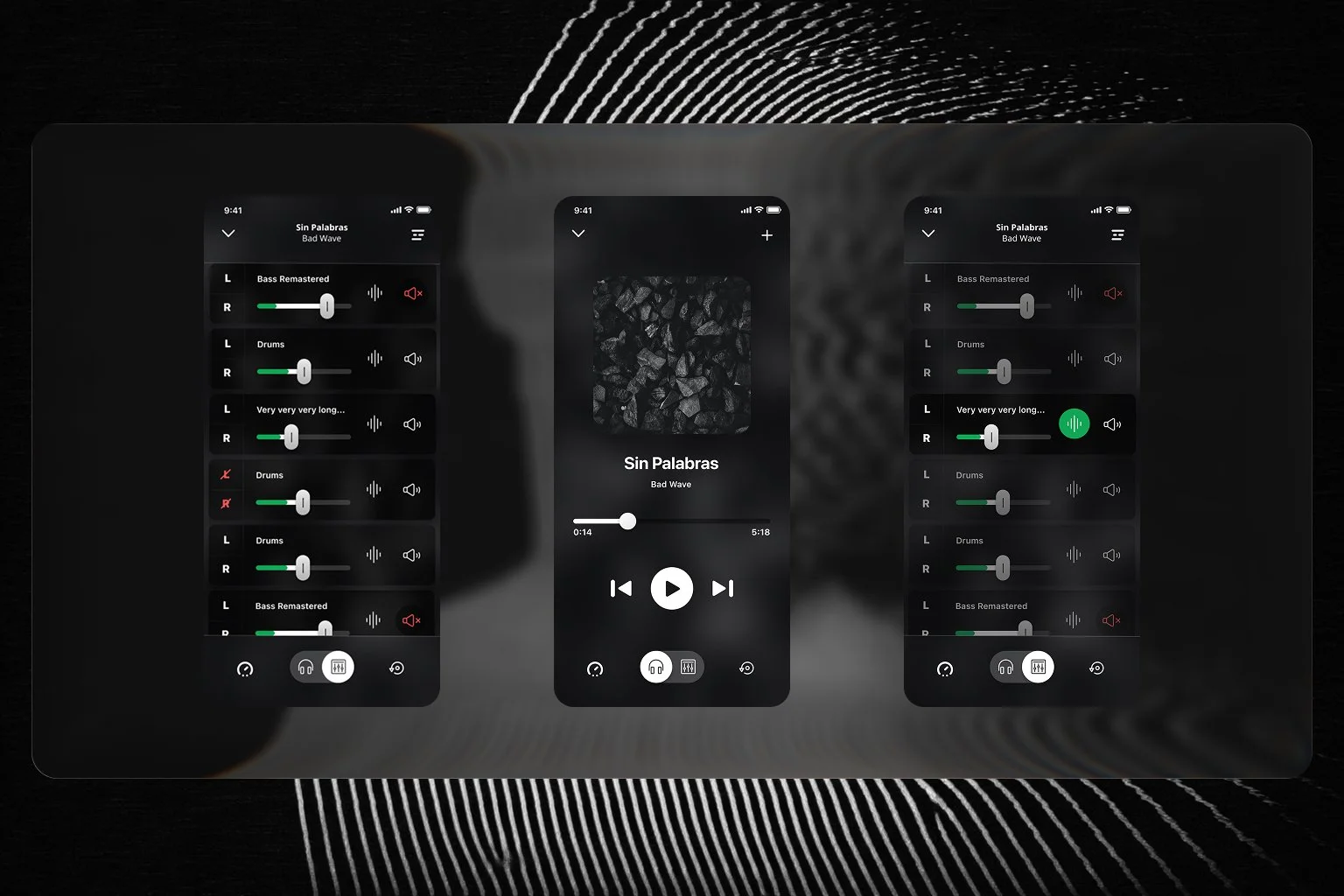
Version 1 Experience
Version 1 focused on the essential workflows required to create, manage, and experience interactive music.
The core experience included:
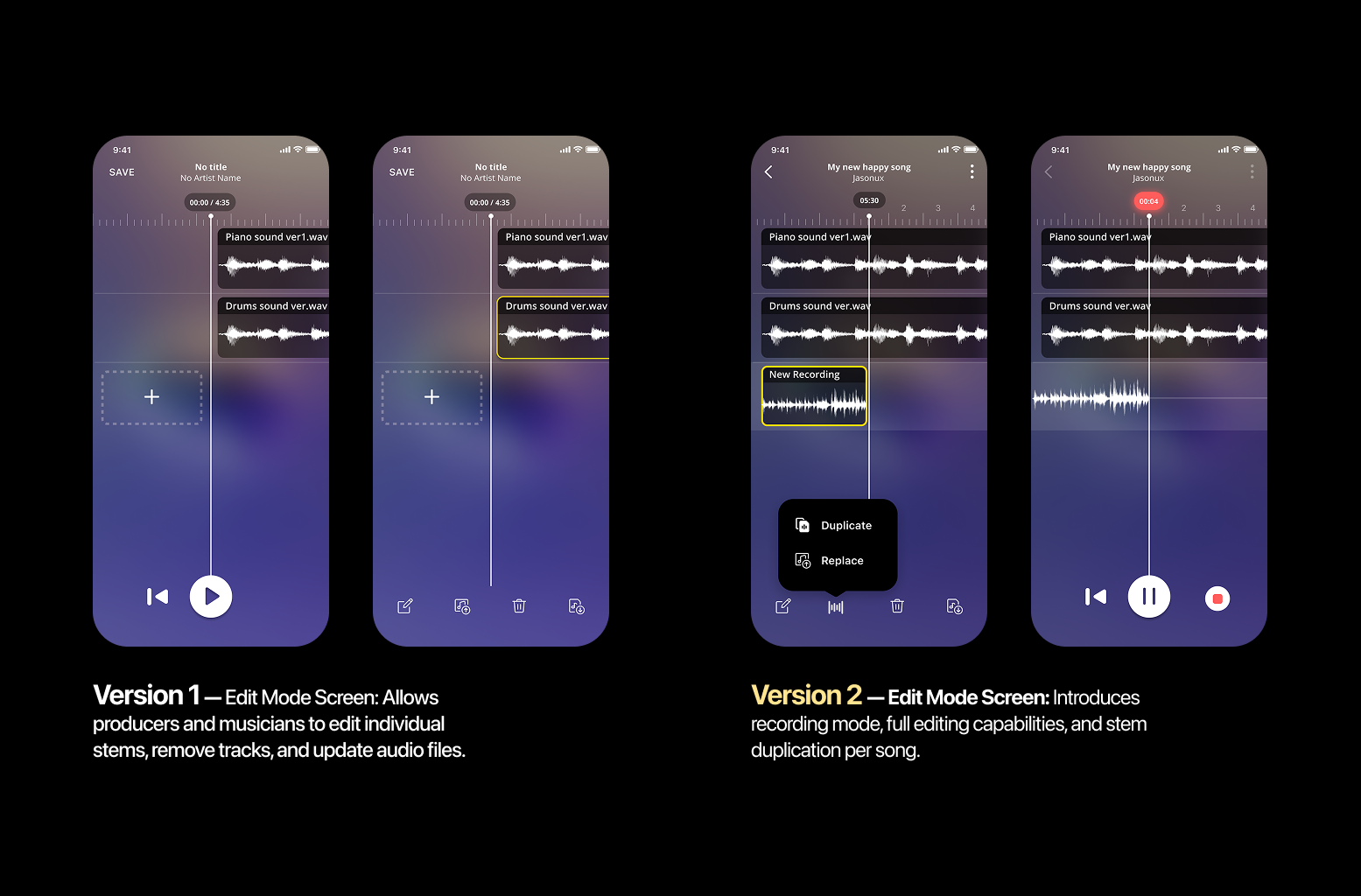
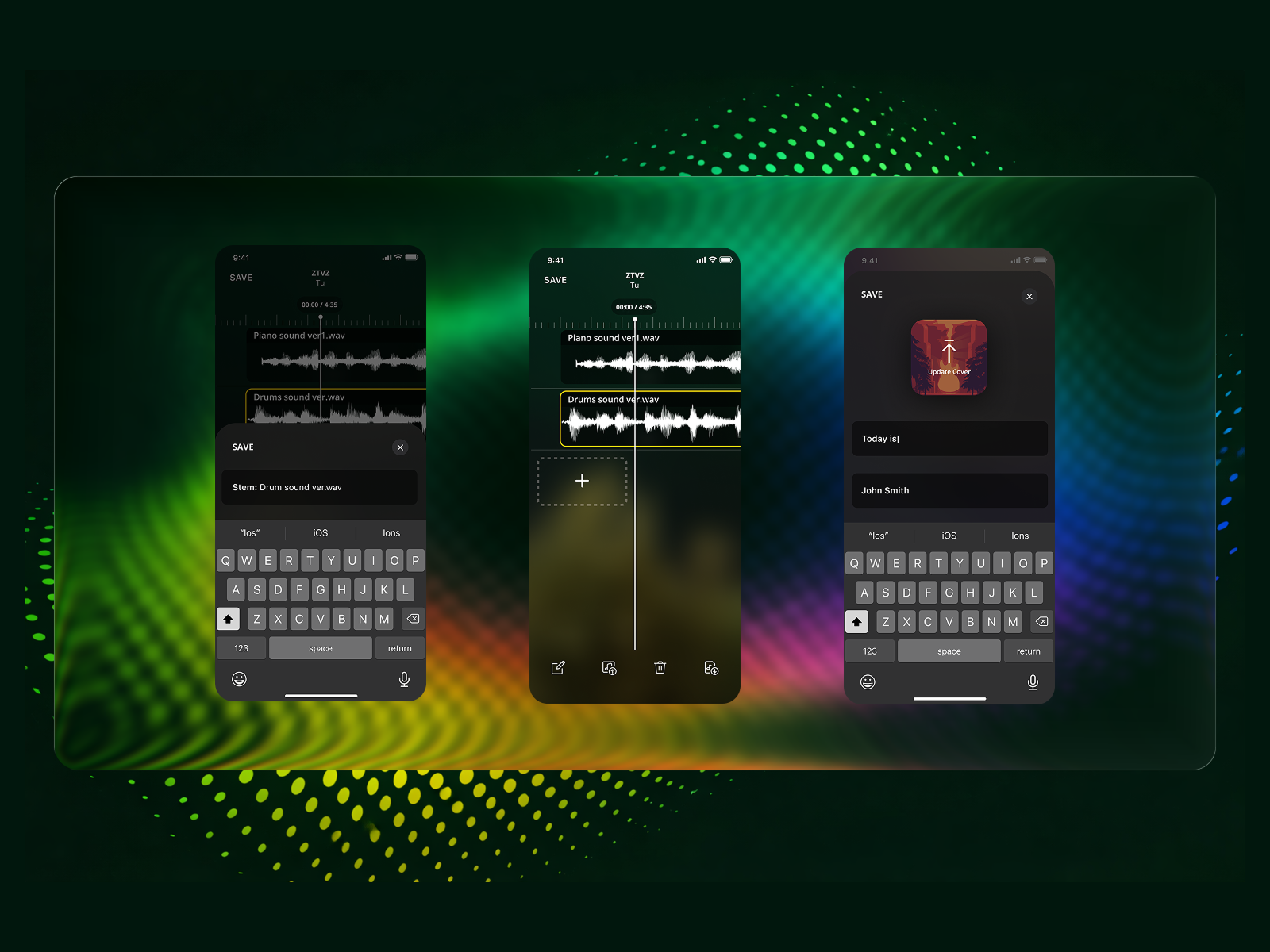
Uploading music and audio stems.
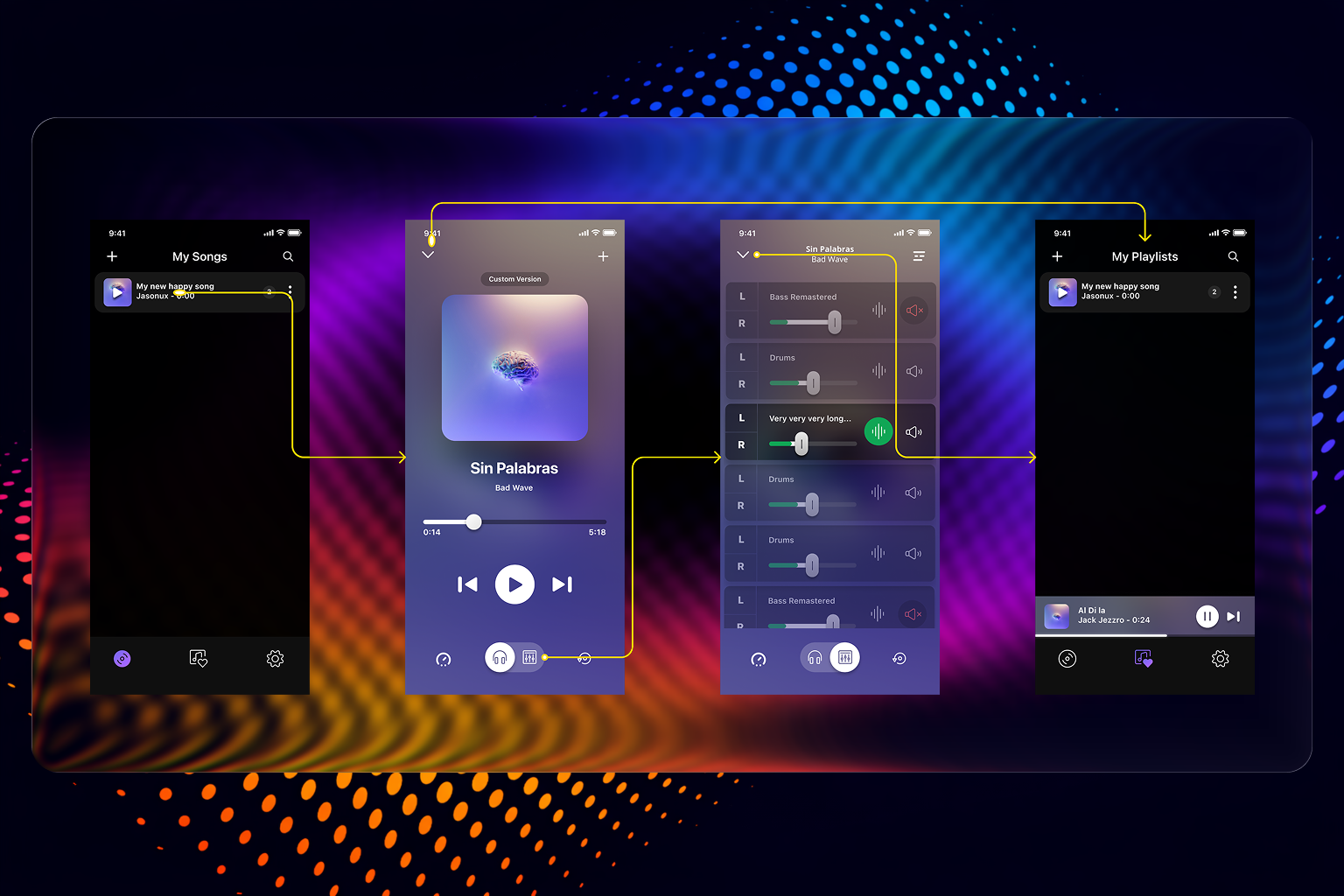
Editing individual stems and controlling sound levels.
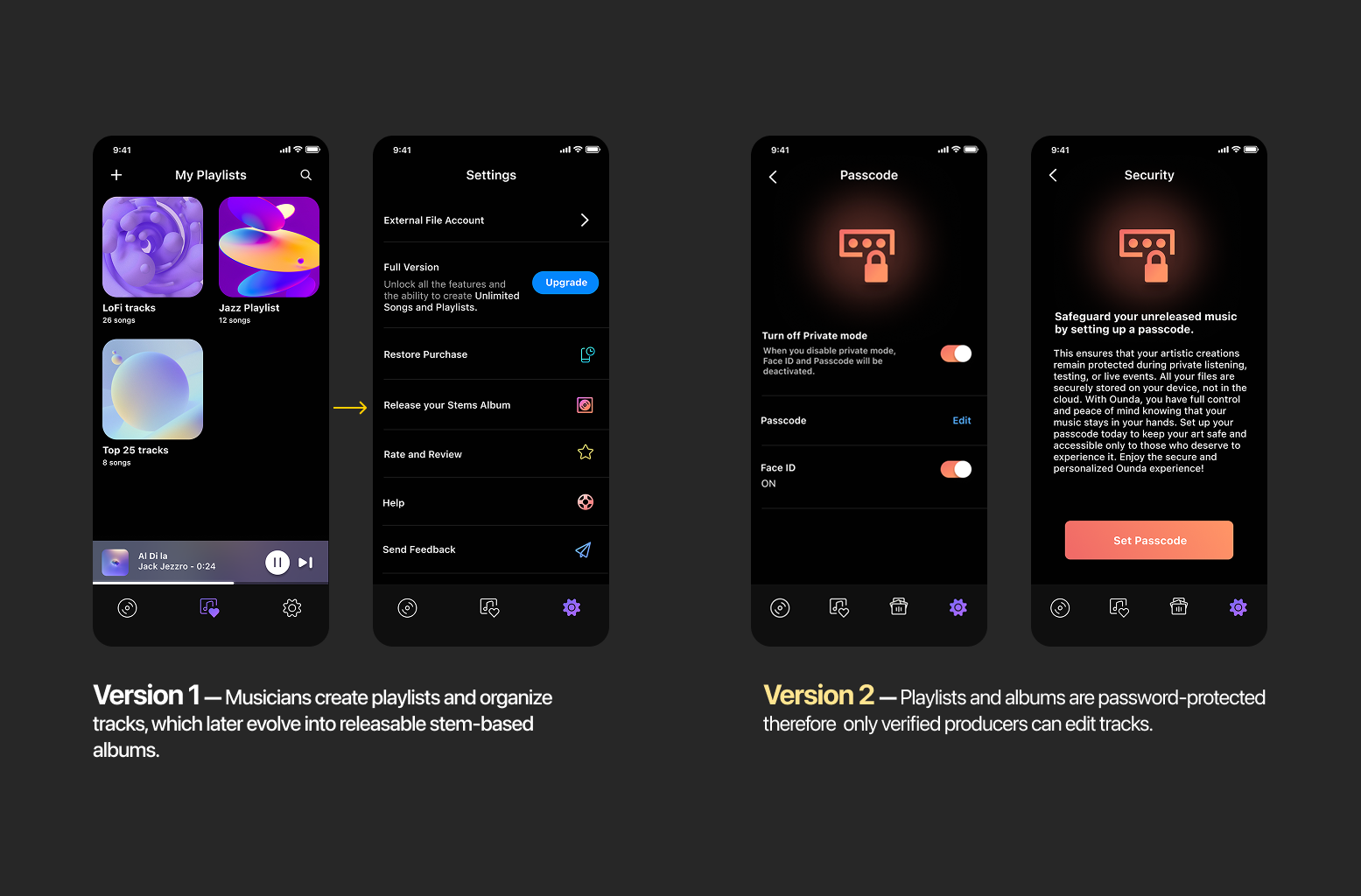
Creating albums and playlists.
Applying visual branding to albums.
I designed reusable interactions so that learning one workflow helped users understand others. This reduced the need to learn each feature independently and established a foundation for introducing more advanced capabilities over time.
Validation & Testing
I evaluated the product direction and core experience through early questionnaires, low-fidelity wireframes, interactive high-fidelity prototypes, and beta testing.
The evaluation focused on:
First-time understanding of the product's purpose.
Users' ability to complete core tasks.
Points of confusion in key workflows.
Feedback on the interactive music experience.
These activities helped assess whether the simplified Version 1 experience communicated the product's value and gave users a clear starting point.
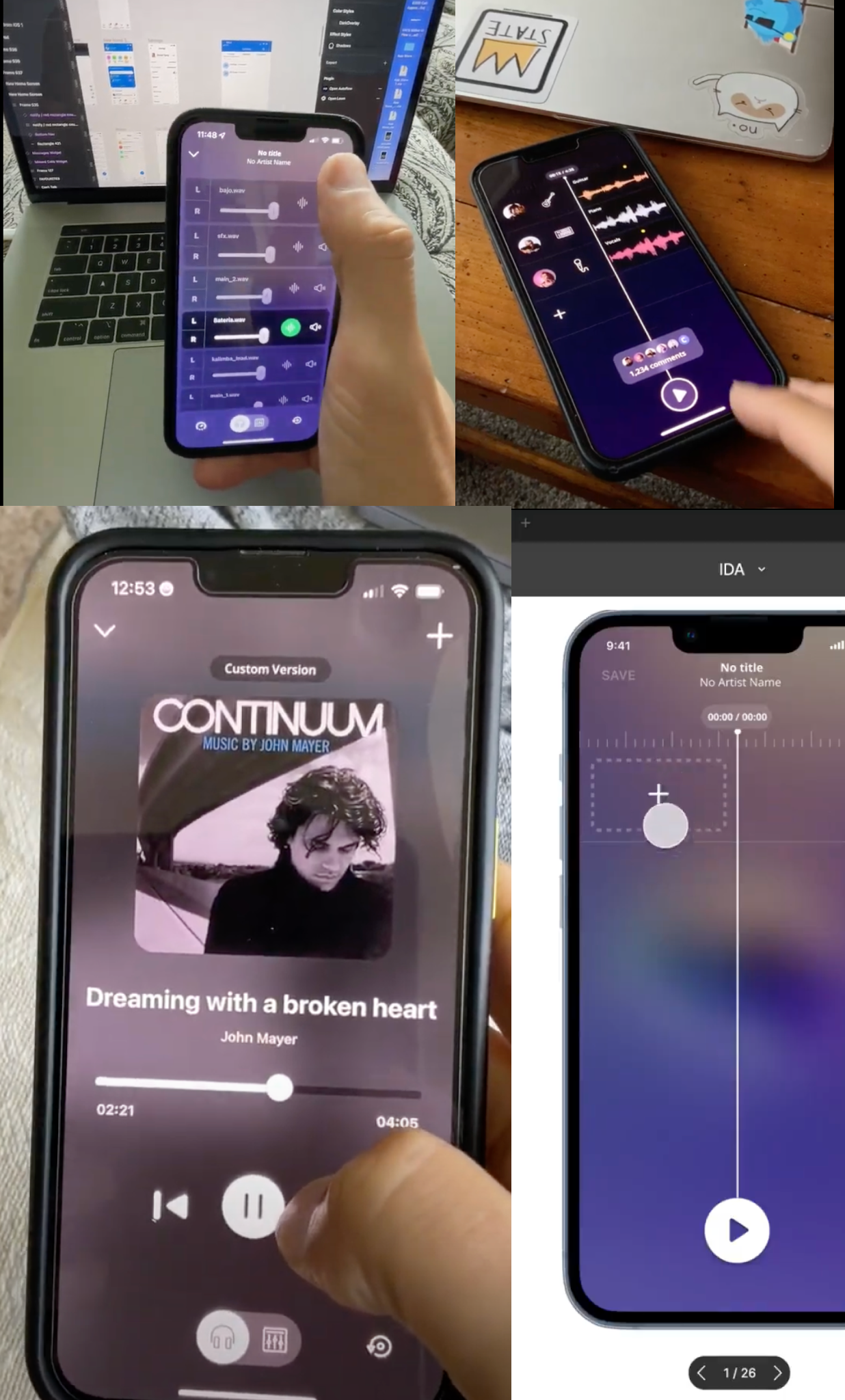
Outcome
87% of beta participants reported understanding the product's purpose and how to use it.
Beta launch: The product launched in beta in 2023, bringing the core interactive music experience to users.
Emerging use cases: Some users explored additional applications, including private listening groups and song testing.
Future product opportunities: Requests for additional features highlighted potential directions for future development while reinforcing the importance of keeping Version 1 focused.
Key Learnings
Broad product visions need clear priorities to translate creative ambition into a usable product.
Progressive disclosure helps users approach complex creative tools without unnecessary cognitive load.
Early moments of delight must be balanced with a clear understanding of the product's core value.
Technical constraints, including large audio files, storage, and cloud dependencies, need to be considered early in product design.
Final Takeaway
Ounda reinforced the importance of turning an ambitious product vision into a focused, understandable experience. By using qualitative research to identify competing user needs, prioritizing an MVP, and applying progressive disclosure, I helped bring the product from early concept to beta launch. The result was a clearer foundation for an interactive music product that could evolve with its users.