
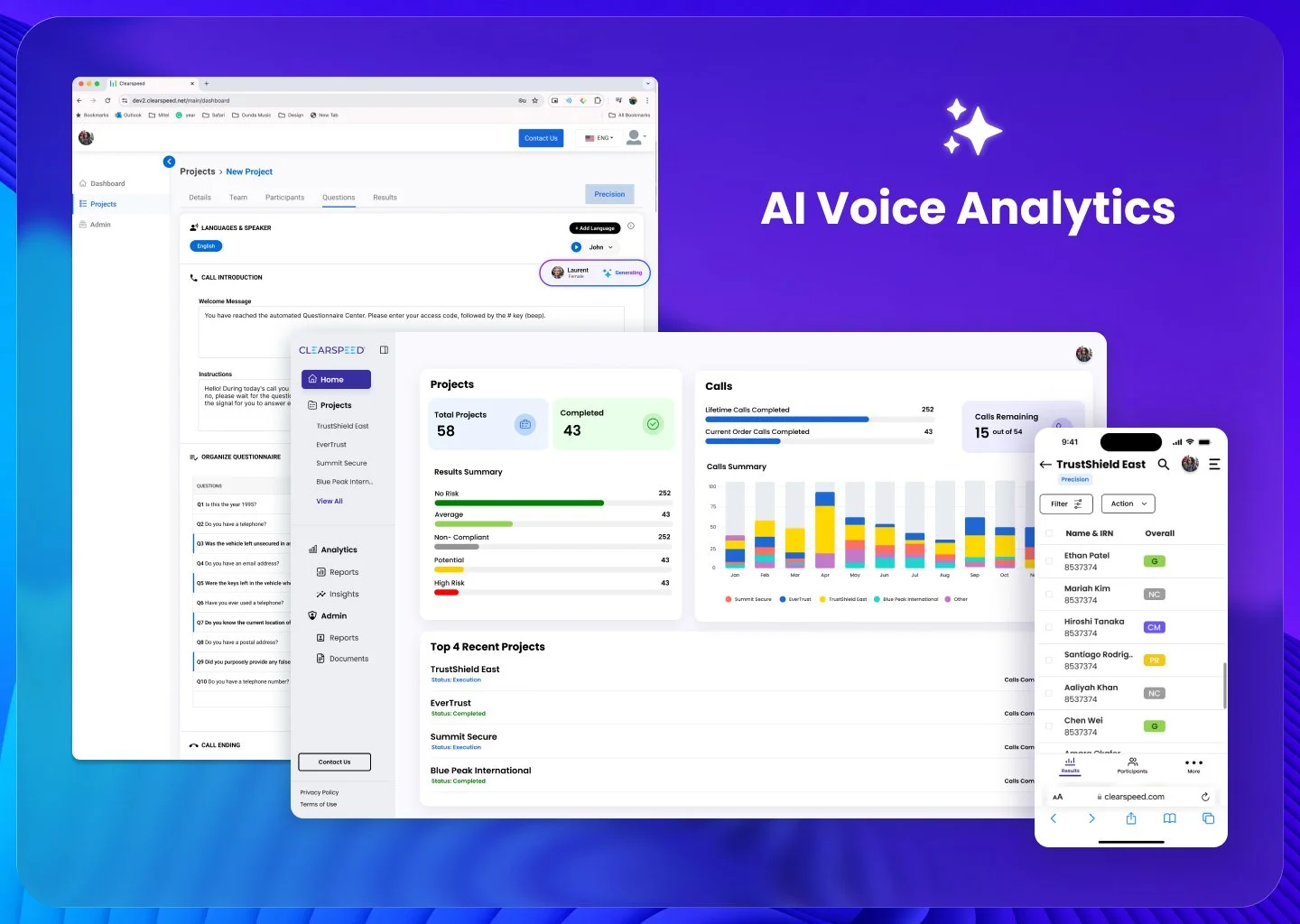
Transforming an AI Service Model into a Scalable Self-Service Enterprise Platform
ClearSpeed is an AI voice-analytics platform used by insurance and government organizations to assess fraud risk and prioritize claims.
When I joined, the AI worked — but the product didn’t scale.
The platform depended on two internal operational teams to manually prepare, submit, interpret, and deliver AI analyses to clients.
As the sole product designer, I led the transformation from a human-dependent service workflow into a scalable self-service enterprise product.
Impact
Reduced operational dependency on internal teams
Shortened deployment and review cycles
Improved clarity of AI outputs
Increased client confidence and usability
Enabled scalable remote risk screening
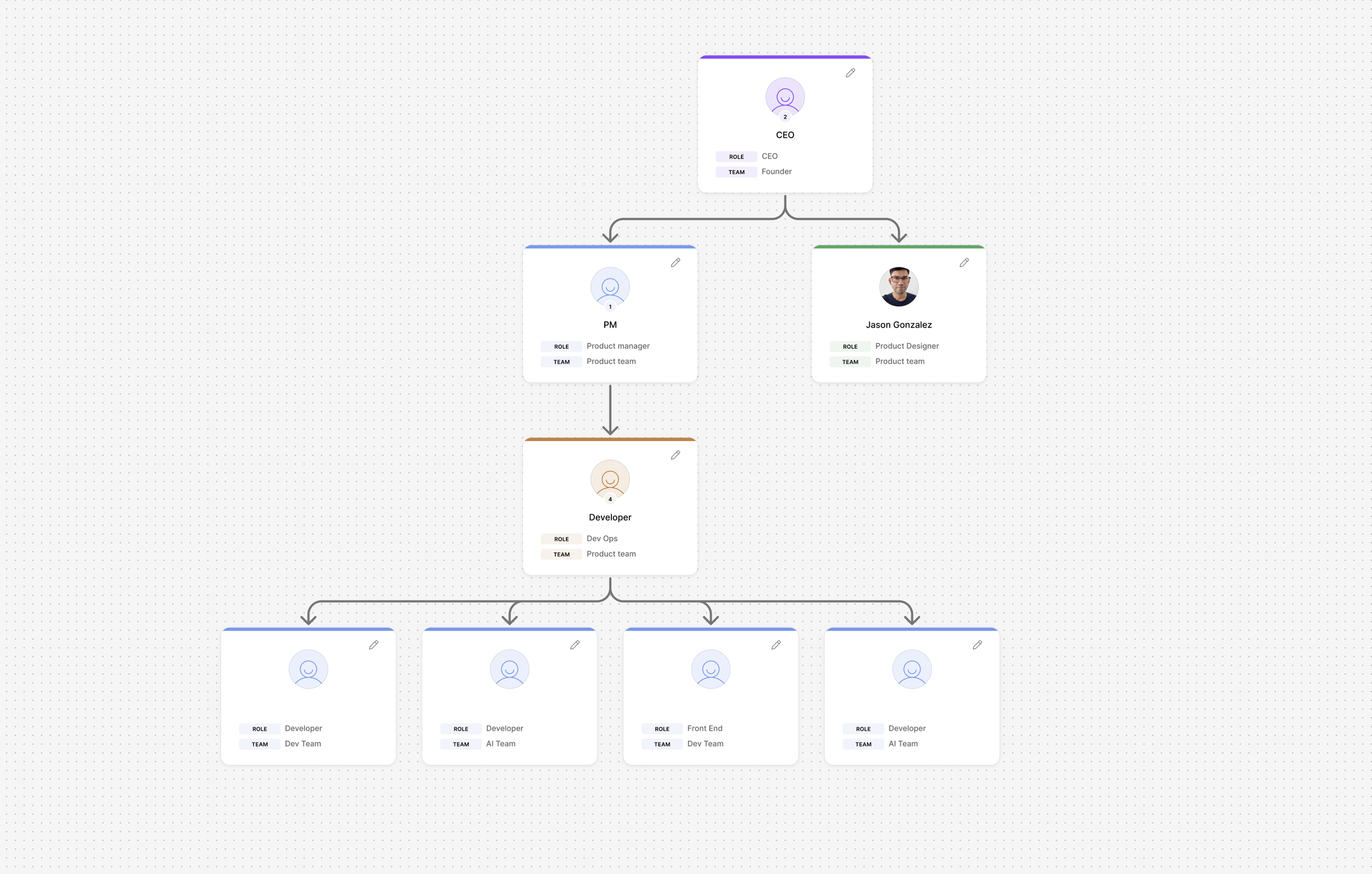
My Role
I was the sole product designer collaborating with five engineers, one project manager, and the company founder.
I owned the design process end-to-end:
Research planning and execution
Stakeholder interviews (internal & clients)
Journey mapping and persona definition
UX architecture and workflow redesign
Prototyping and usability testing
Final UI design
Engineering collaboration during implementation
Creation of the first scalable Figma component library
Responsive design (web-first, 40% mobile usage)
This was not just interface design — it was product restructuring.
The Original Problem
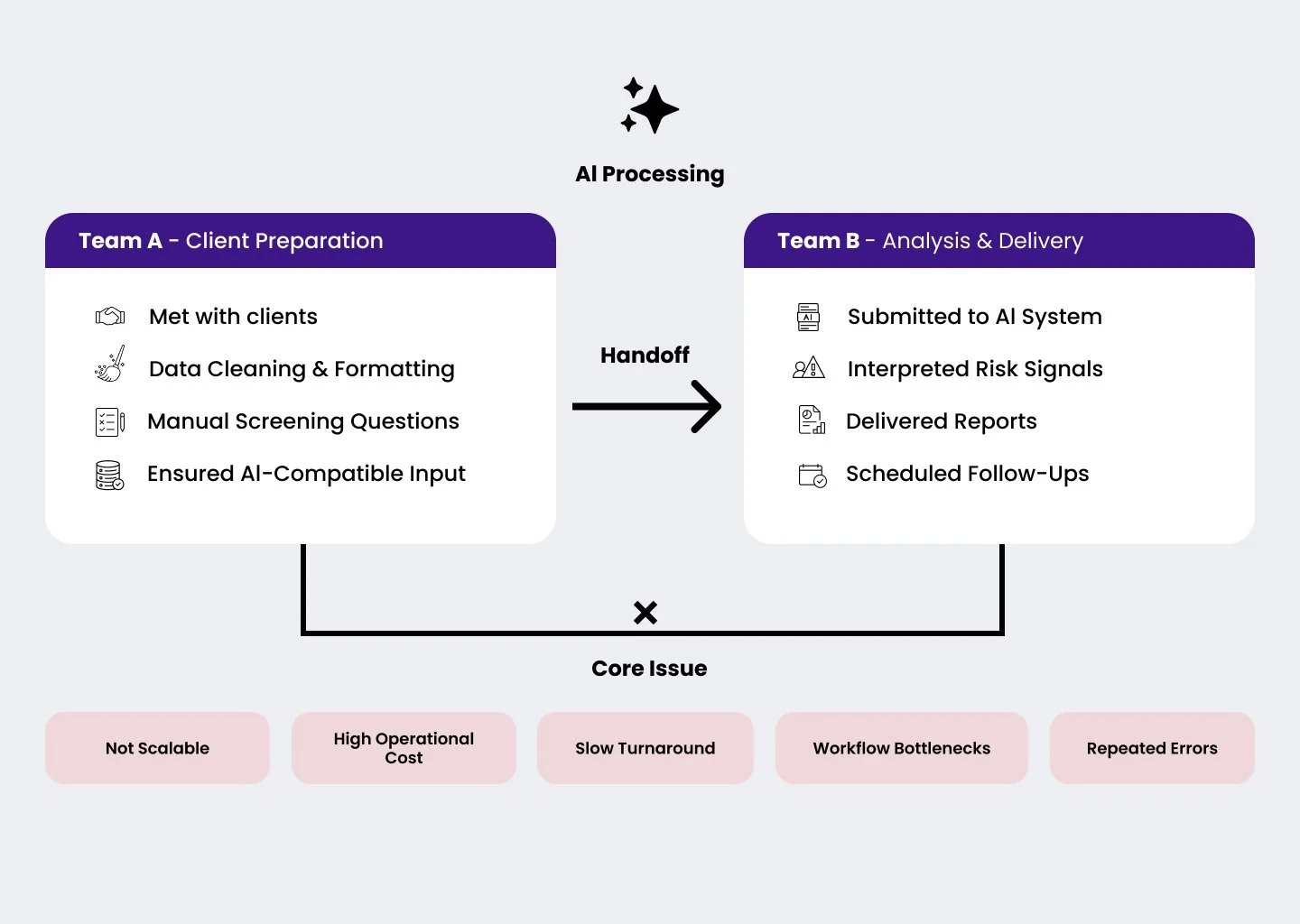
In some cases, a single analysis required days of coordination.
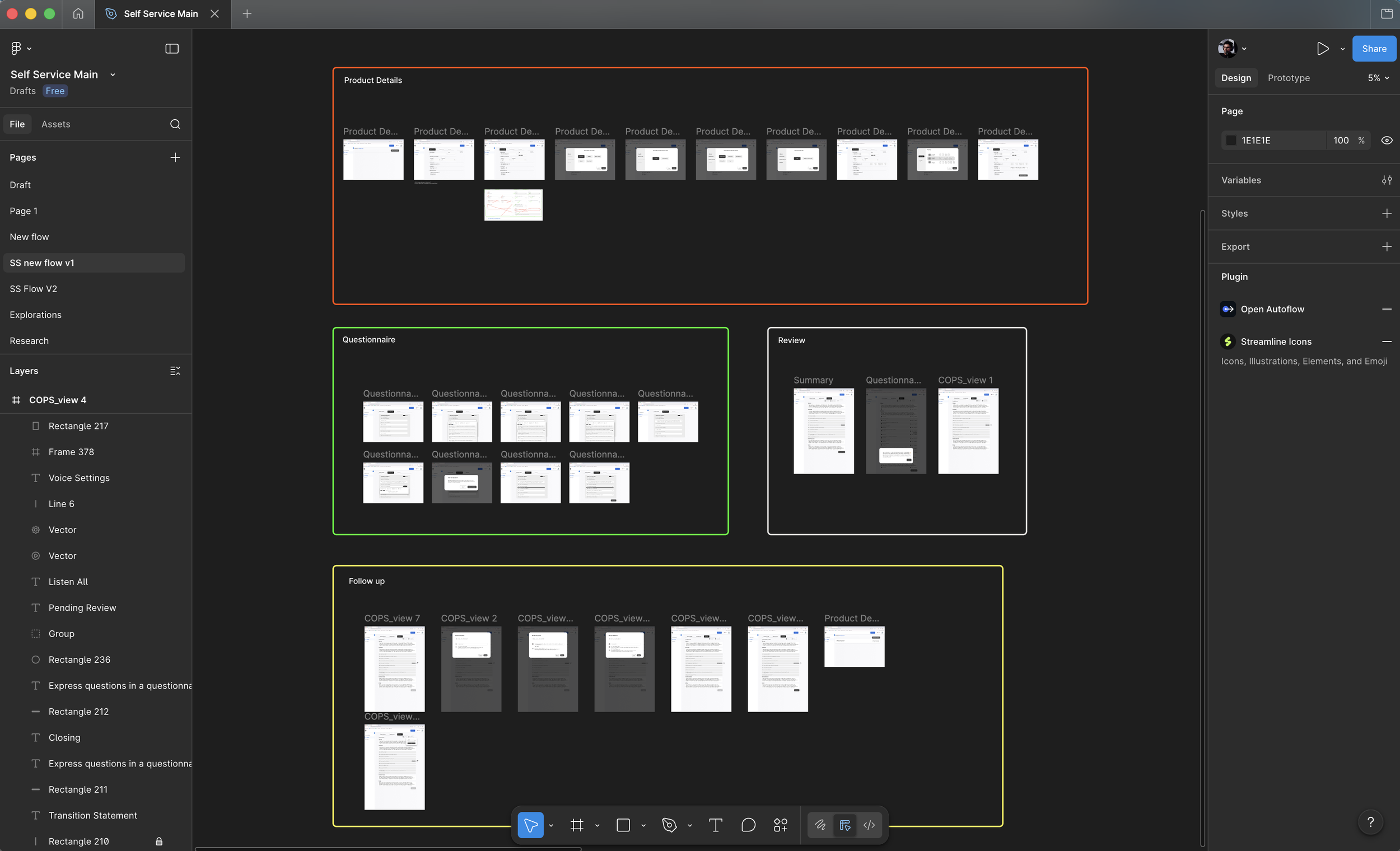
ClearSpeed’s AI required two internal teams to operate. The AI functioned more like a service layer than a product.
Understanding the Real Friction
I started by mapping internal operations.
I interviewed both teams to analyze task breakdowns, time per phase, failure points, redo rates, cross-team dependencies, and regulatory constraints. Through this research, I discovered that end-to-end journeys often took days or even weeks to complete. Custom question creation required engineering intervention, creating additional bottlenecks. Clients were largely unaware of the internal operational complexity, and most delays were caused by structural workflow issues rather than limitations in the AI itself.

Then I shifted focus to clients.
Through weekly research sessions with active clients, I gathered:
Pain points
Confusion areas
Frustrations
Desired autonomy
Deployment expectations
This reshaped the entire product strategy.
A Critical Trade-Off: Custom Questions vs Pre-Written Intelligence
One major bottleneck stood out.
Most screening questions were pre-written and optimized for AI accuracy.
But when clients requested custom questions:
Engineering needed to write them
Internal validation was required
Deployment could take days or weeks
This slowed everything down.
My Design Decision
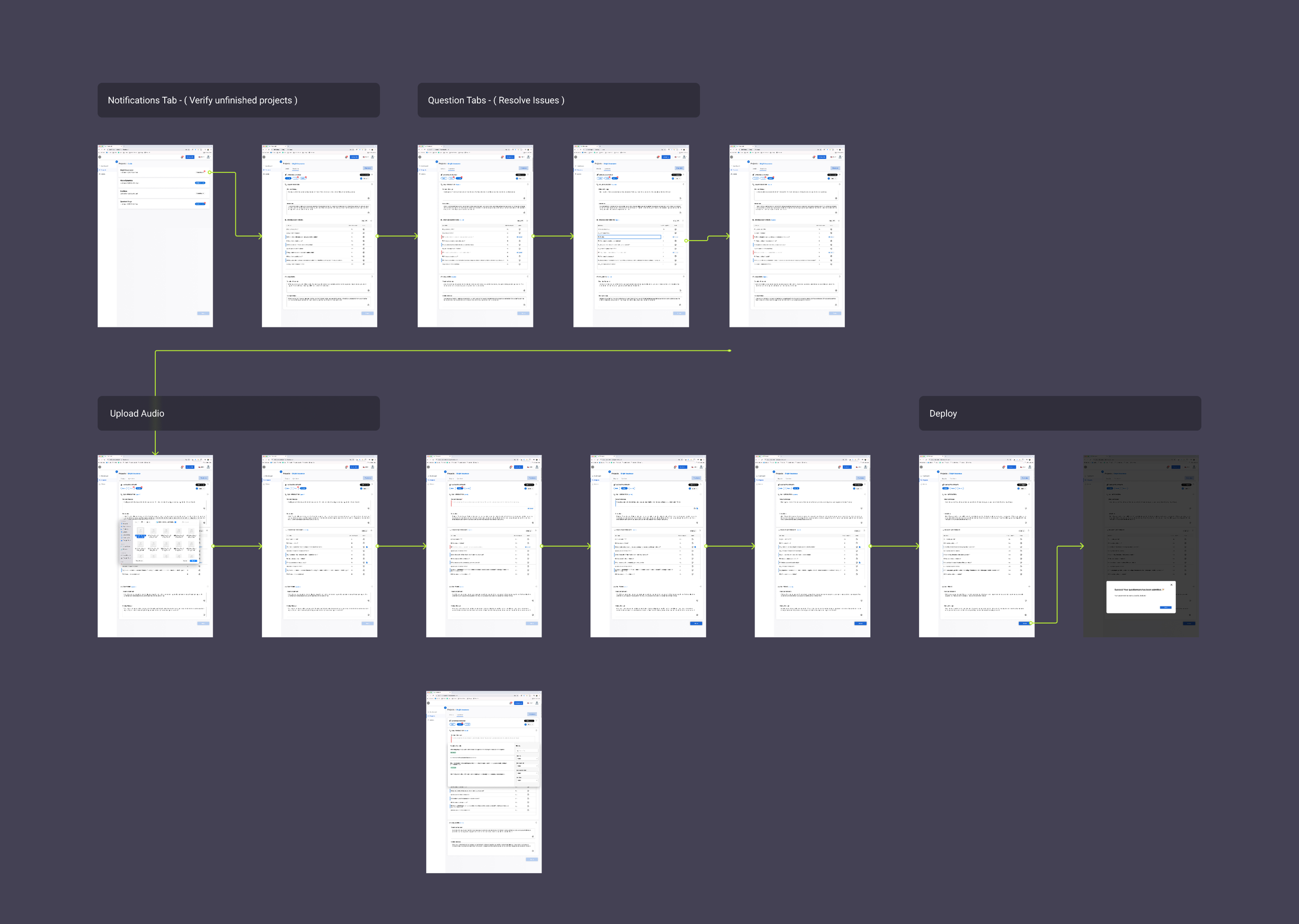
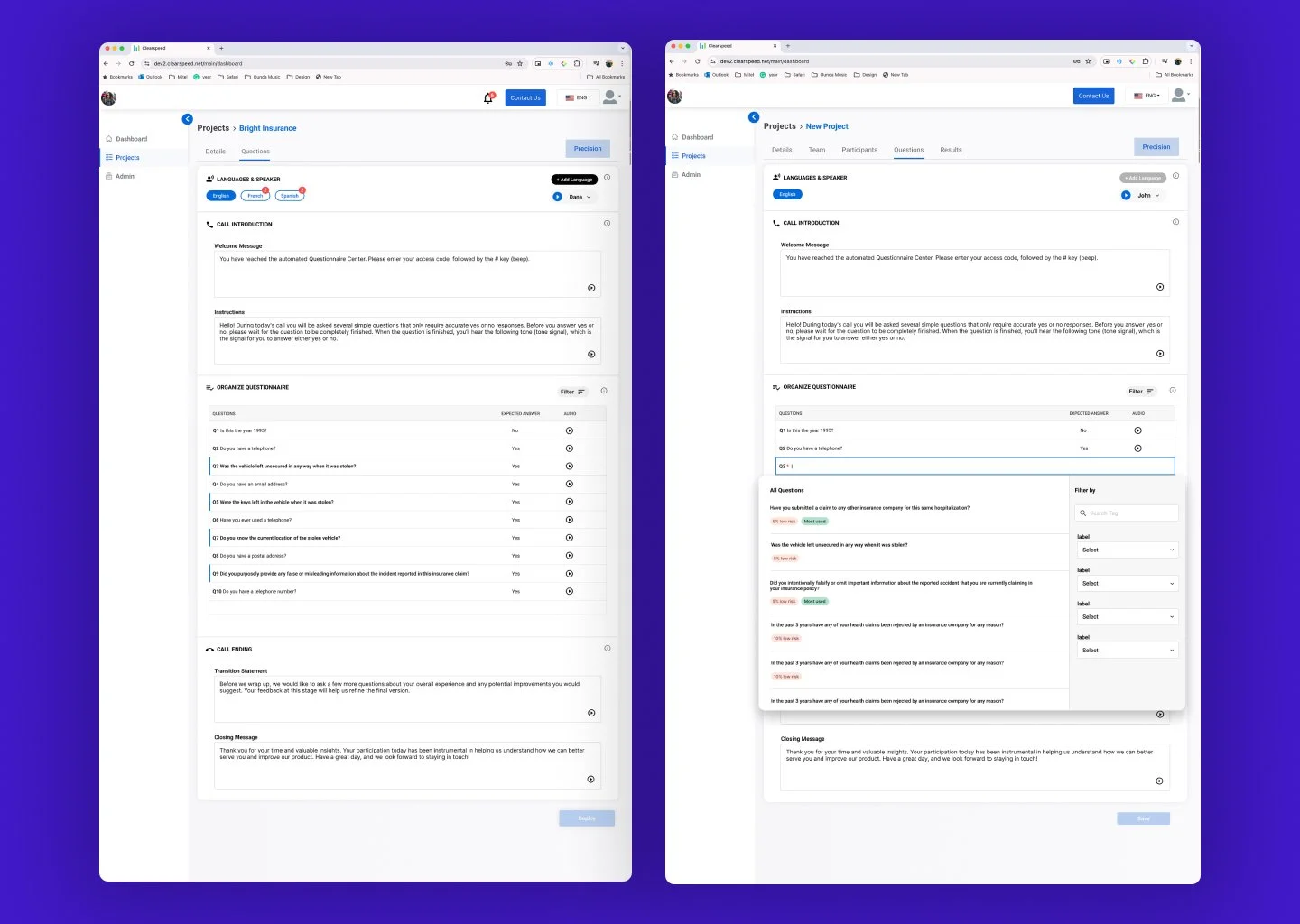
Instead of removing custom questions, I redesigned the system to guide users toward optimized pre-written questions while preserving flexibility.
I introduced:
A structured question library
A guided stepper that visually communicated deployment speed
Clear system messaging explaining review delays for custom entries
Leveraging the AI Audio System
To reinforce this behavior, I integrated our AI voice generation and audio library into the experience.
When users selected a pre-written question:
The system generated the voice output instantly
No review process was required
No waiting time was introduced
Users could immediately select their preferred AI voice
The final audio experience was delivered in real time
This created a strong sense of completion.
The user selected → generated → and received output instantly.
By contrast, when users entered a custom question:
The system clearly communicated that review was required
Processing time would be longer
Deployment would occur later
This established a clear “do it now” versus “do it later” behavioral pattern.
Behavioral Outcome
Users could instantly understand the trade-off:
Pre-written → Immediate deployment + instant AI voice generation
Custom → Review required + delayed deployment
In usability testing, most users preferred the structured pre-written library once they experienced the speed, immediacy, and completion feedback loop.
The design preserved freedom while naturally guiding users toward the optimized path through clarity, speed, and psychological reward.
Measurable Improvements
After launch:
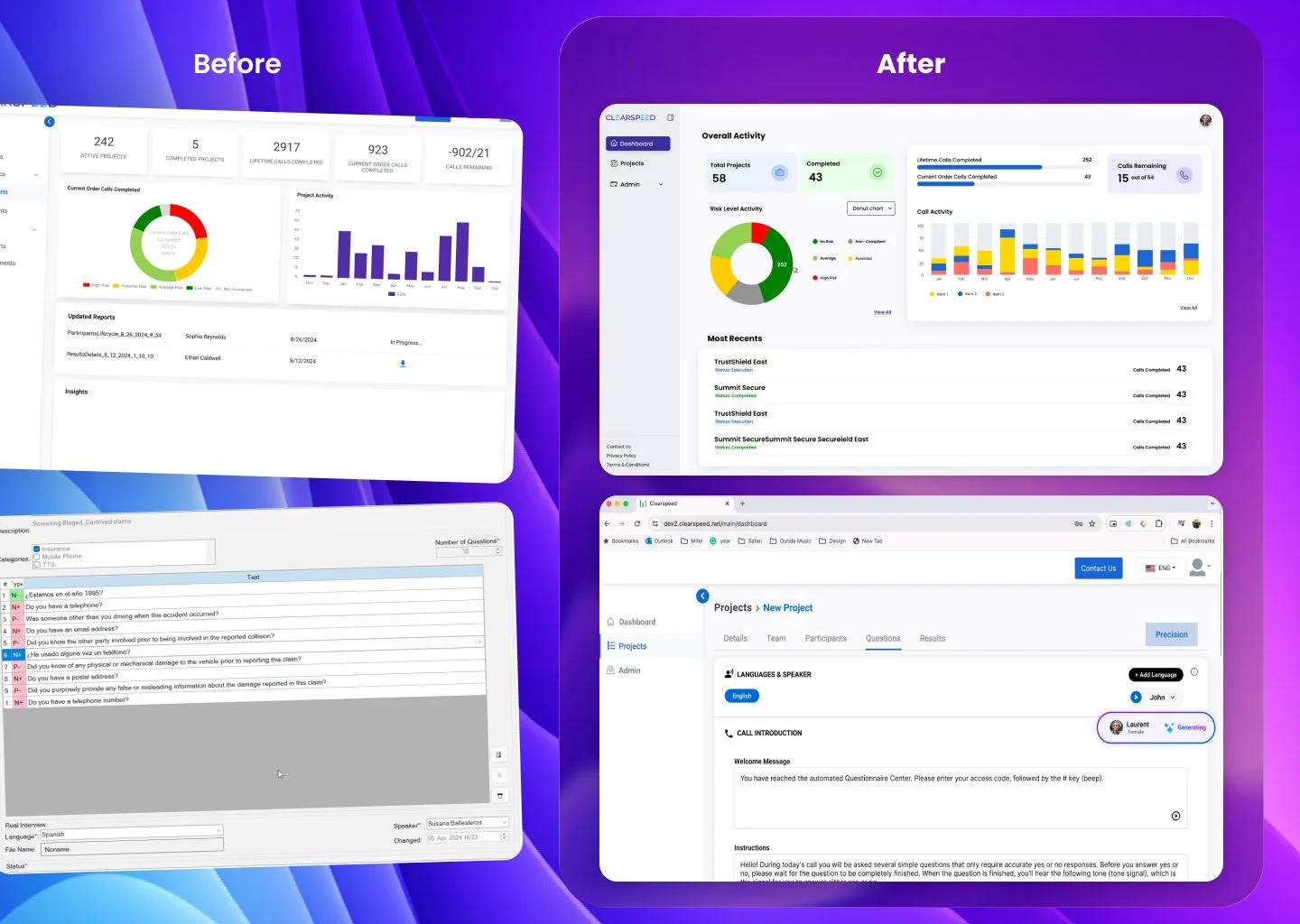
Reduced internal team dependency
Shortened deployment timelines
Increased user completion rates
Improved satisfaction during onboarding
Reduced repeated test submissions
The AI moved from being service-operated to product-driven.
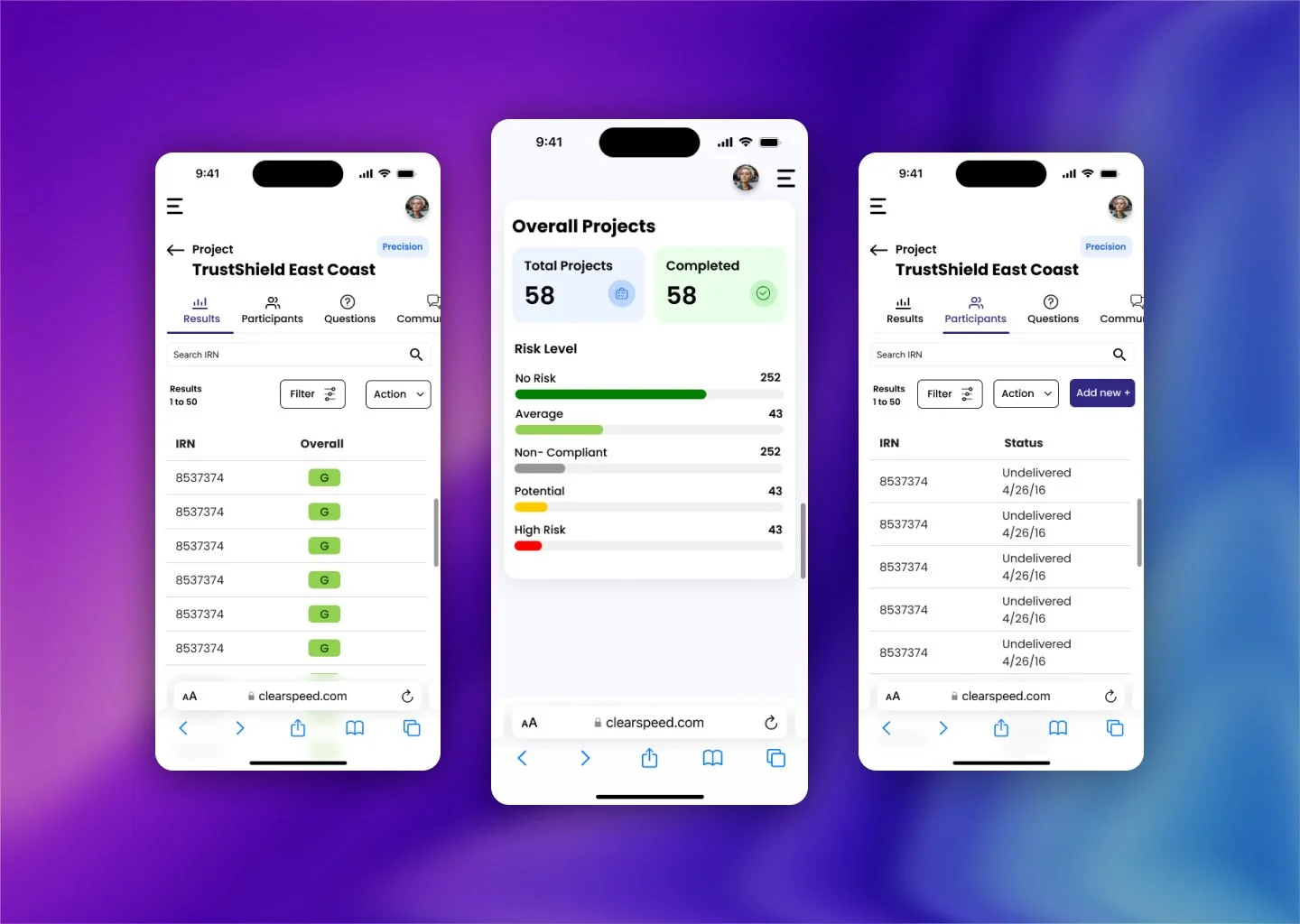
Mobile Expansion
After stabilizing the web experience, I began translating workflows into responsive and mobile contexts.
Mobile required:
Tighter hierarchy
Reduced cognitive load
Simplified input flows
The mobile experience was launched successfully, though I did not complete its long-term evolution due to contract conclusion.
Reflection & Future Opportunities
If I were to evolve this product further, I would:
Simplify AI response interpretation even more
Introduce reusable deployment templates
Reduce call scheduling dependencies
Explore automation in validation layers
There is an opportunity to move from guided configuration to predictive configuration.