
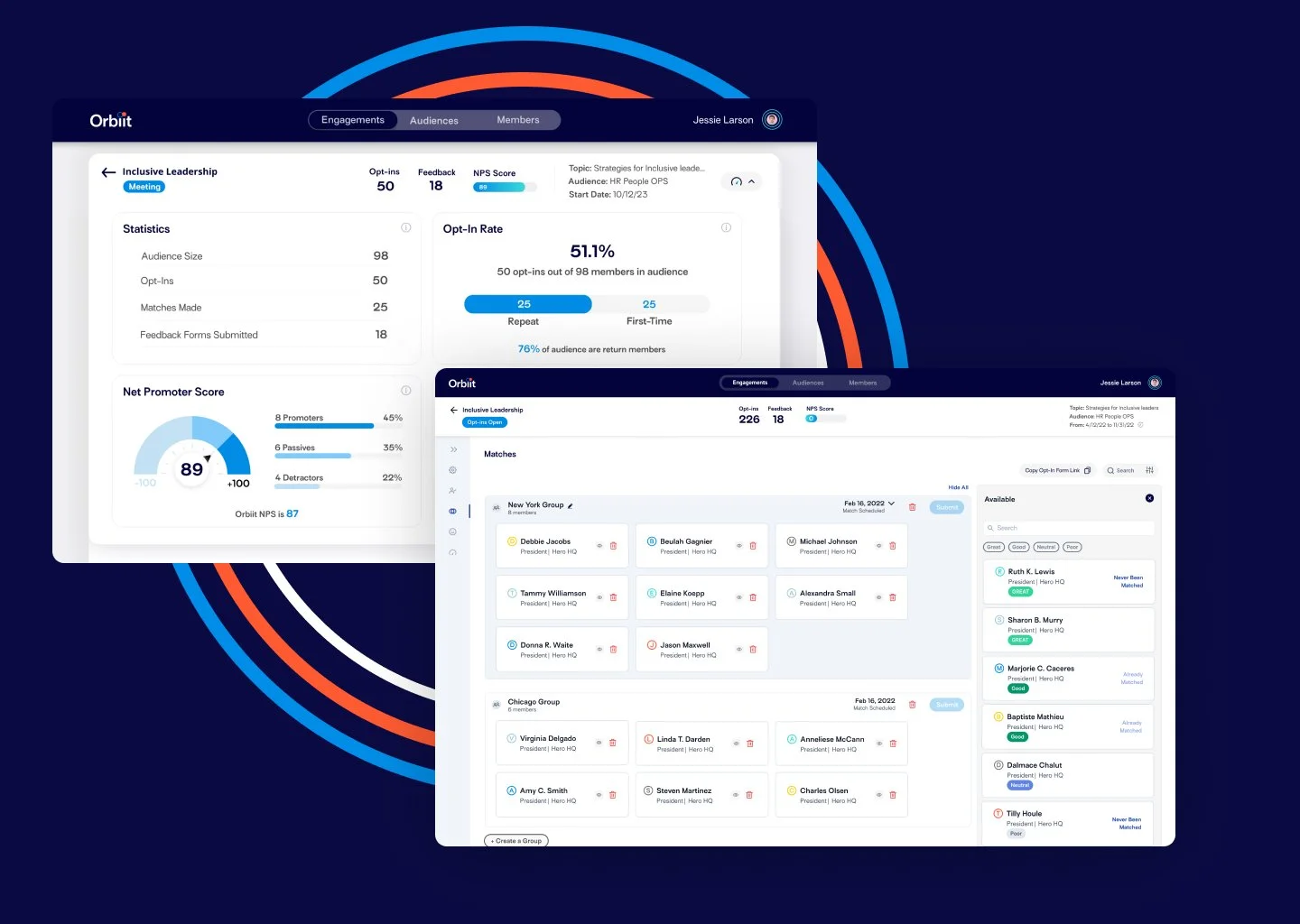
Turning AI Matching Into a Product People Can Use
Orbiit is an AI powered networking platform that helps Community Managers create meaningful professional connections at scale.
The AI matching engine already existed, but turning its capabilities into a usable product required a clear workflow and a practical way for users to manage connections. As Senior UX Designer, I led the experience from the ground up, translating complex AI functionality into an actionable product.
Role and Project Details
Role: Senior UX Designer
Ownership: End-to-end product design
Team: Founders, PM, and three junior designers
Product: AI-powered SaaS
The Core Problem
AI could identify matches. The product couldn't manage the connections.
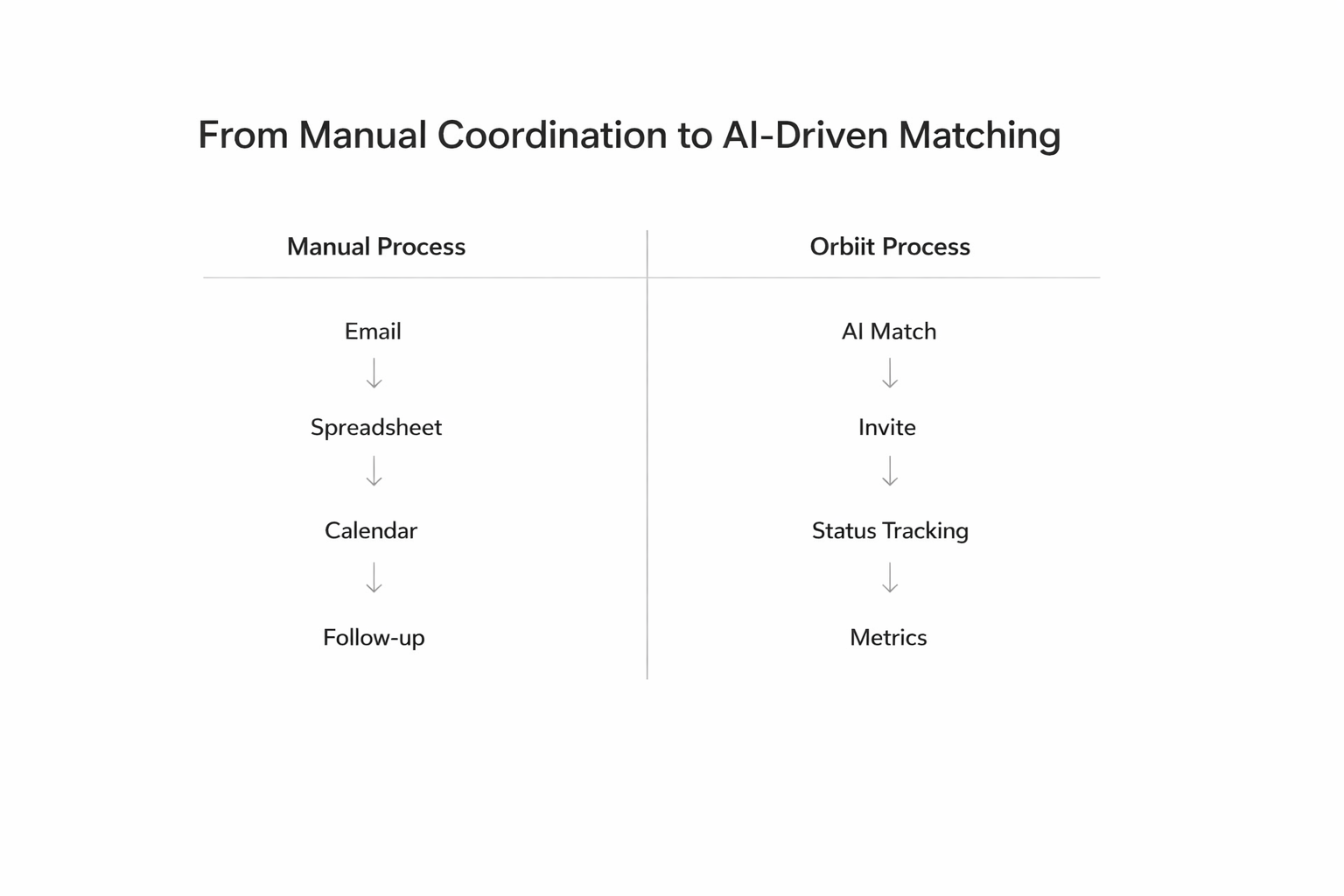
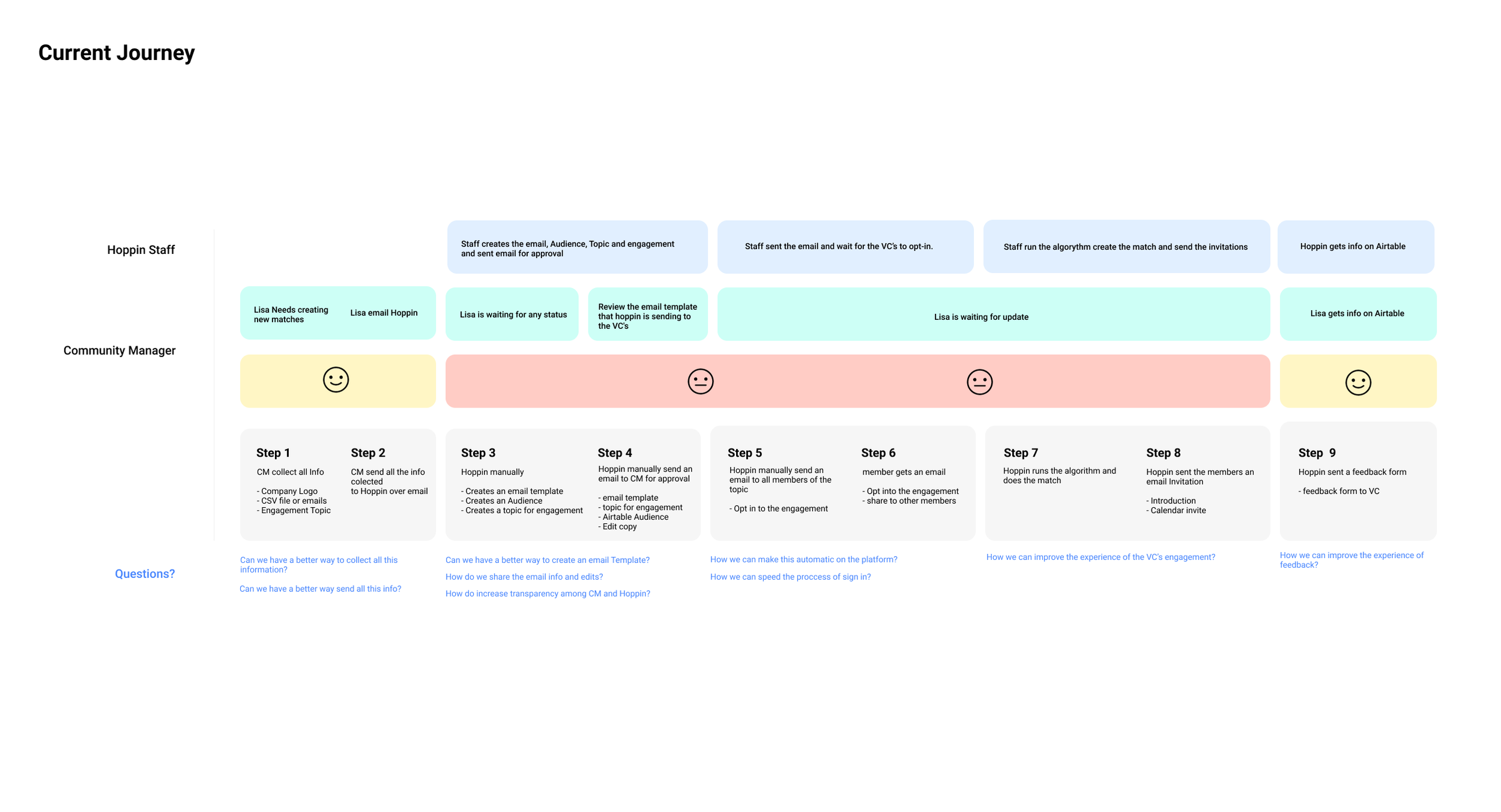
Community Managers were spending hours coordinating member introductions through emails, spreadsheets, and calendars. Once the AI generated a match, there was no unified workflow to manage invitations, track connection status, or understand whether those introductions were creating value.
The challenge was to turn AI-generated matches into a repeatable, manageable networking process—one that gave Community Managers visibility into what was happening and helped them measure the results.

My Contribution
For the first eight months, I led product design for Orbiit, partnering directly with the founders and a product manager to define the MVP, prioritize the roadmap, and translate the existing AI matching engine into a usable product.
My contributions spanned four key areas:
Product strategy: Helped define MVP scope and prioritize features around user needs and product readiness.
UX and interaction design: Established core workflows, interaction patterns, and interface structure.
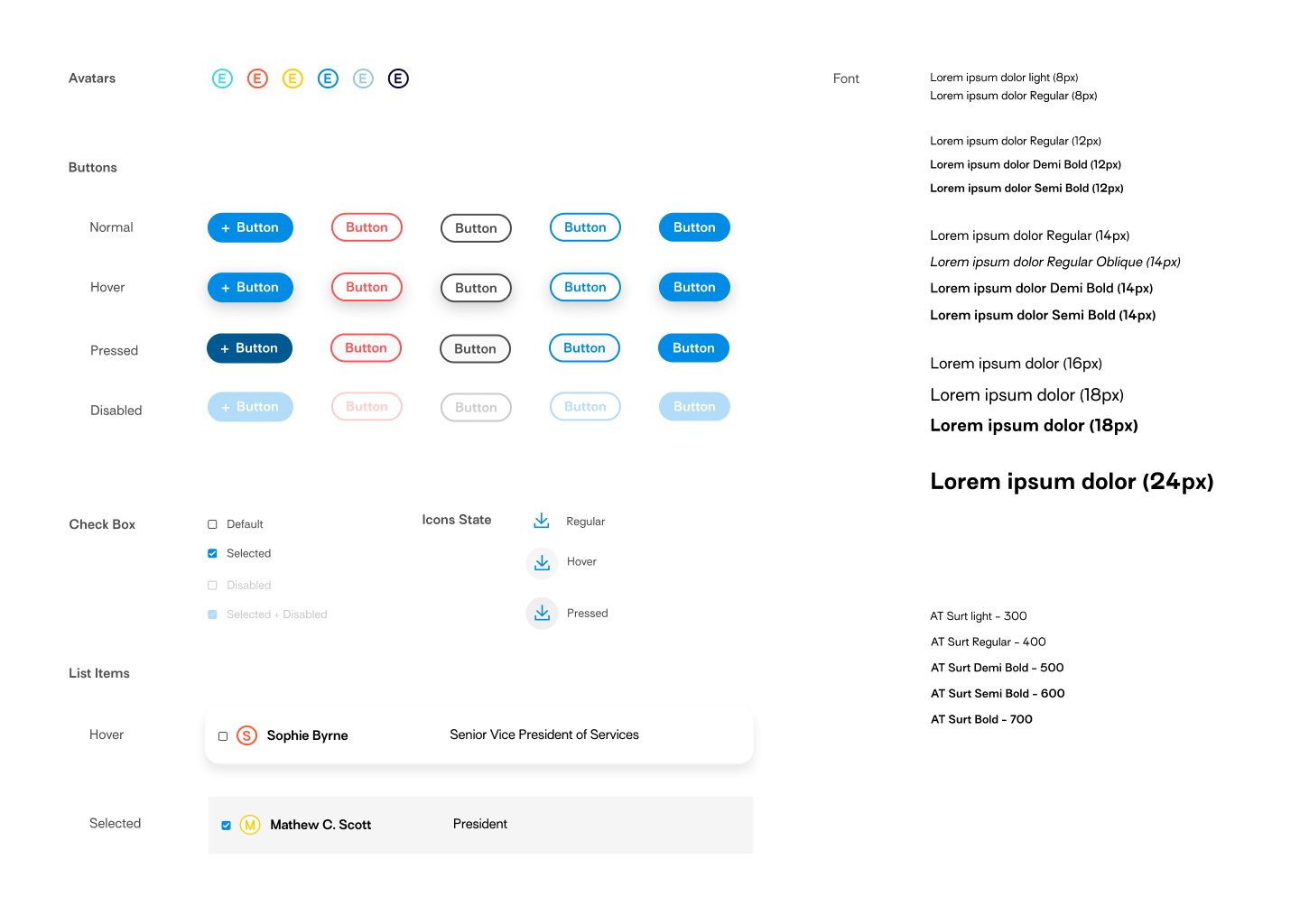
Design systems: Built a reusable component library to support consistency and future development.
Design leadership: Led and mentored three junior designers based in Spain.
I connected product priorities, user needs, and design execution to help turn an existing AI capability into a structured product experience.

Understanding the User
Two needs. One connected experience.
Community Managers needed more than AI-generated matches. They needed a practical way to manage introductions and understand whether those connections were creating value.
My research revealed two key priorities:
Speed and simplicity
Some users wanted to create matches and coordinate introductions quickly, without adding more manual work to their day.
Visibility and outcomes
Others needed to track connection progress, understand engagement, and report on the value of their networking programs.
These needs shaped the product direction: prioritize a simple matching workflow while building toward better connection tracking and performance visibility.
Strategic Prioritization
Validate the core workflow before expanding the feature set.
Stakeholders initially wanted to ship multiple advanced features at once. But before expanding the product, we needed to understand which capabilities would address users' most important needs.
Through focused user interviews, I identified five core capabilities, with structured AI-powered invitations emerging as a key priority.
I prioritized 1:1 matching for the beta, giving us a focused way to introduce the core matching workflow, gather user feedback, and validate the experience before expanding its complexity.
Feedback from the initial experience helped inform the next phase of product development, including the expansion into multi-match capabilities.
The principle: Validate the core experience first. Expand when user feedback supports the next step.
Designing the Experience
Turn AI-generated matches into actionable connections.
The challenge was to make AI-powered networking practical for Community Managers. Users needed a clear way to act on matches, coordinate introductions, and understand what happened after an invitation was sent.
I structured the experience around three priorities.
1. Make matching actionable
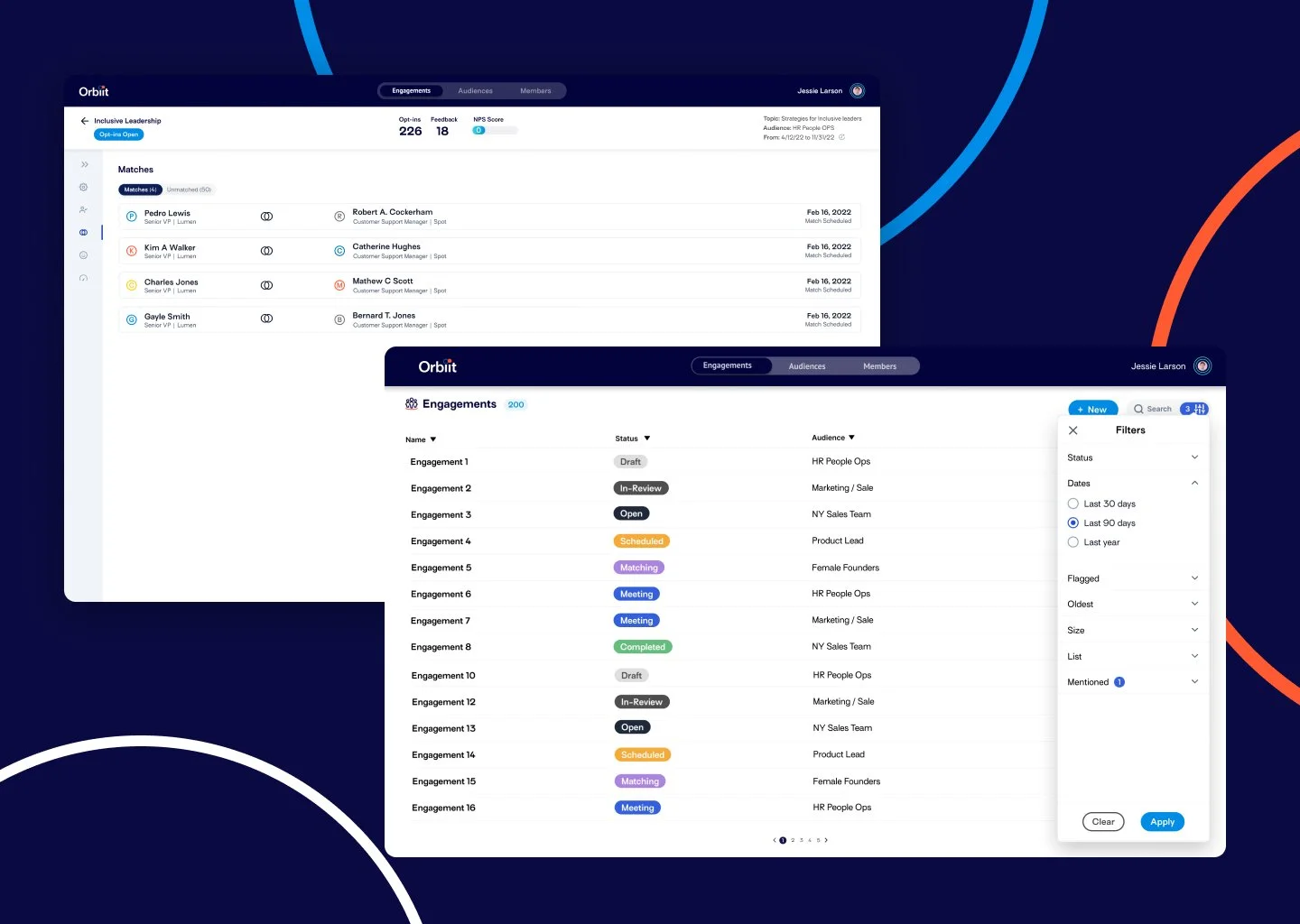
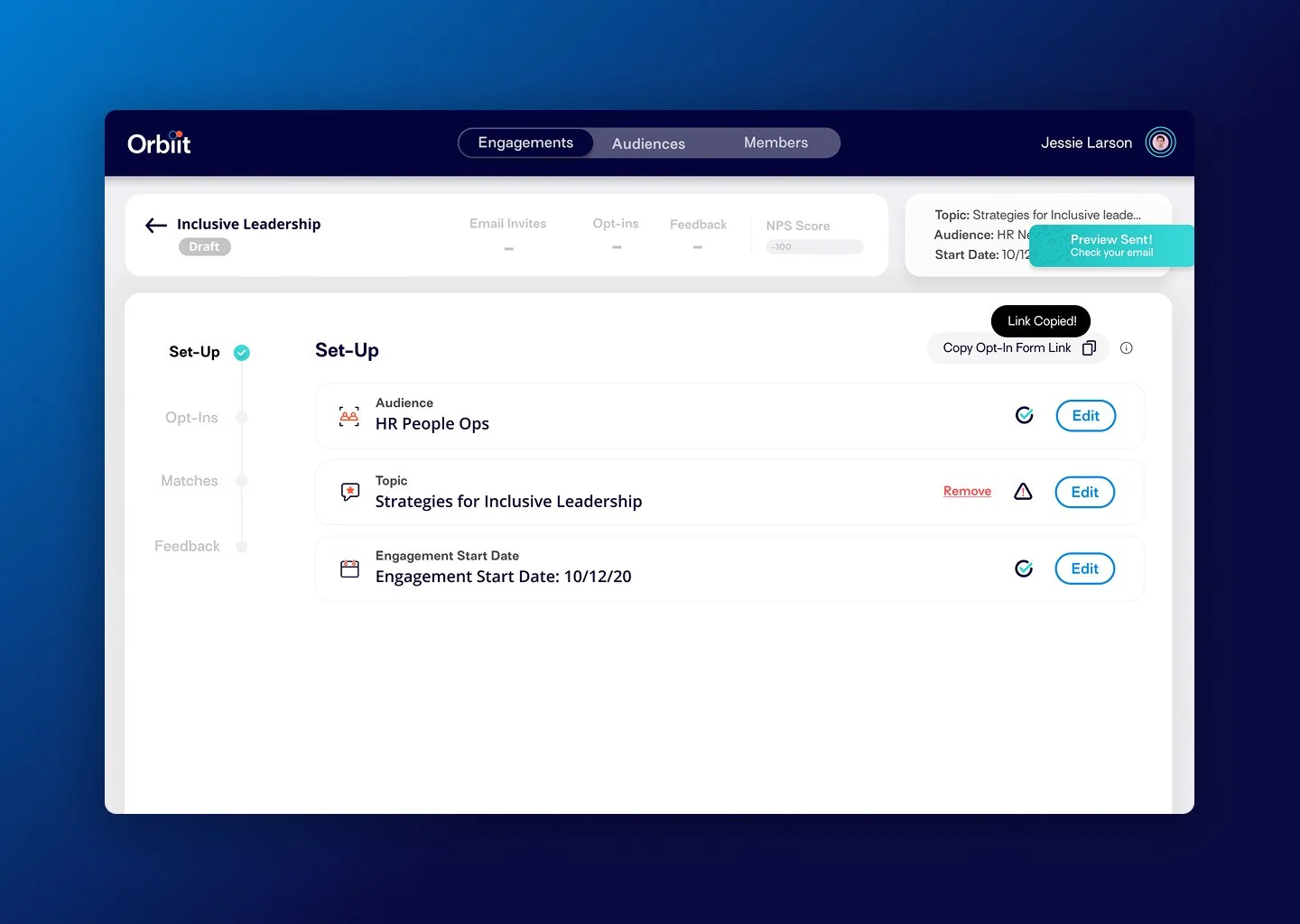
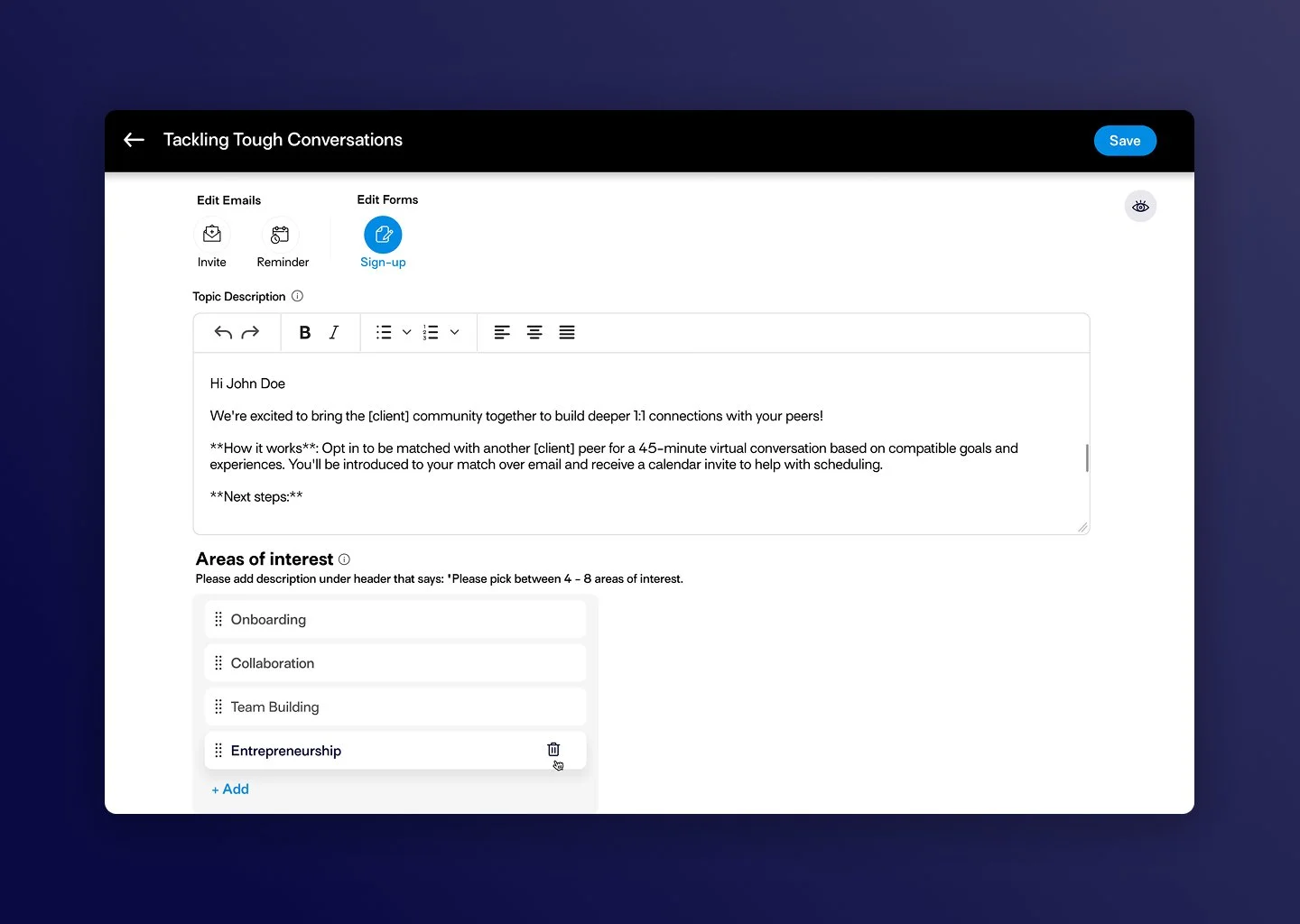
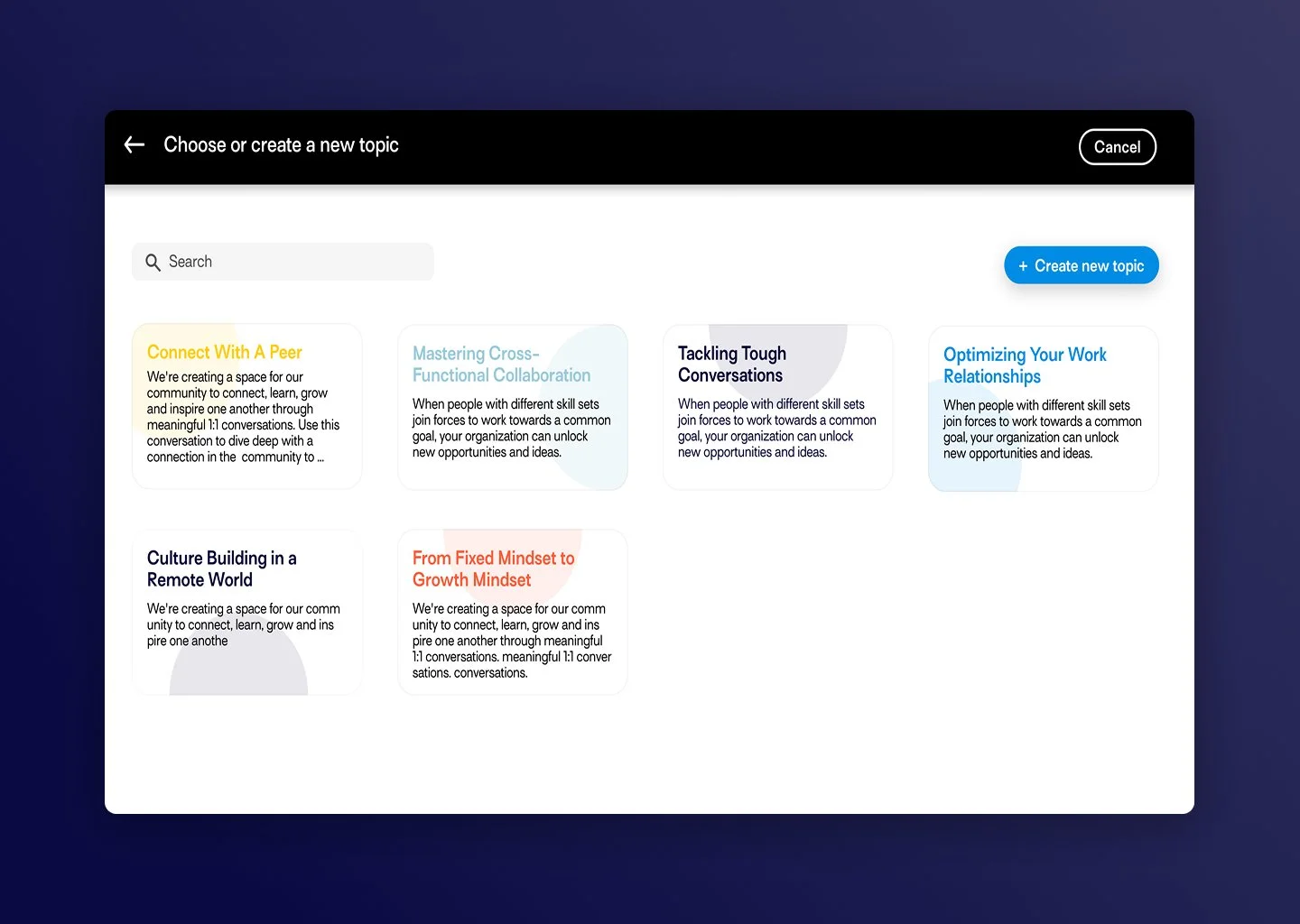
AI-generated matches needed to lead to a clear next step. I designed structured invitation flows that helped Community Managers move from a suggested match to an actionable introduction.
2. Make connection progress visible
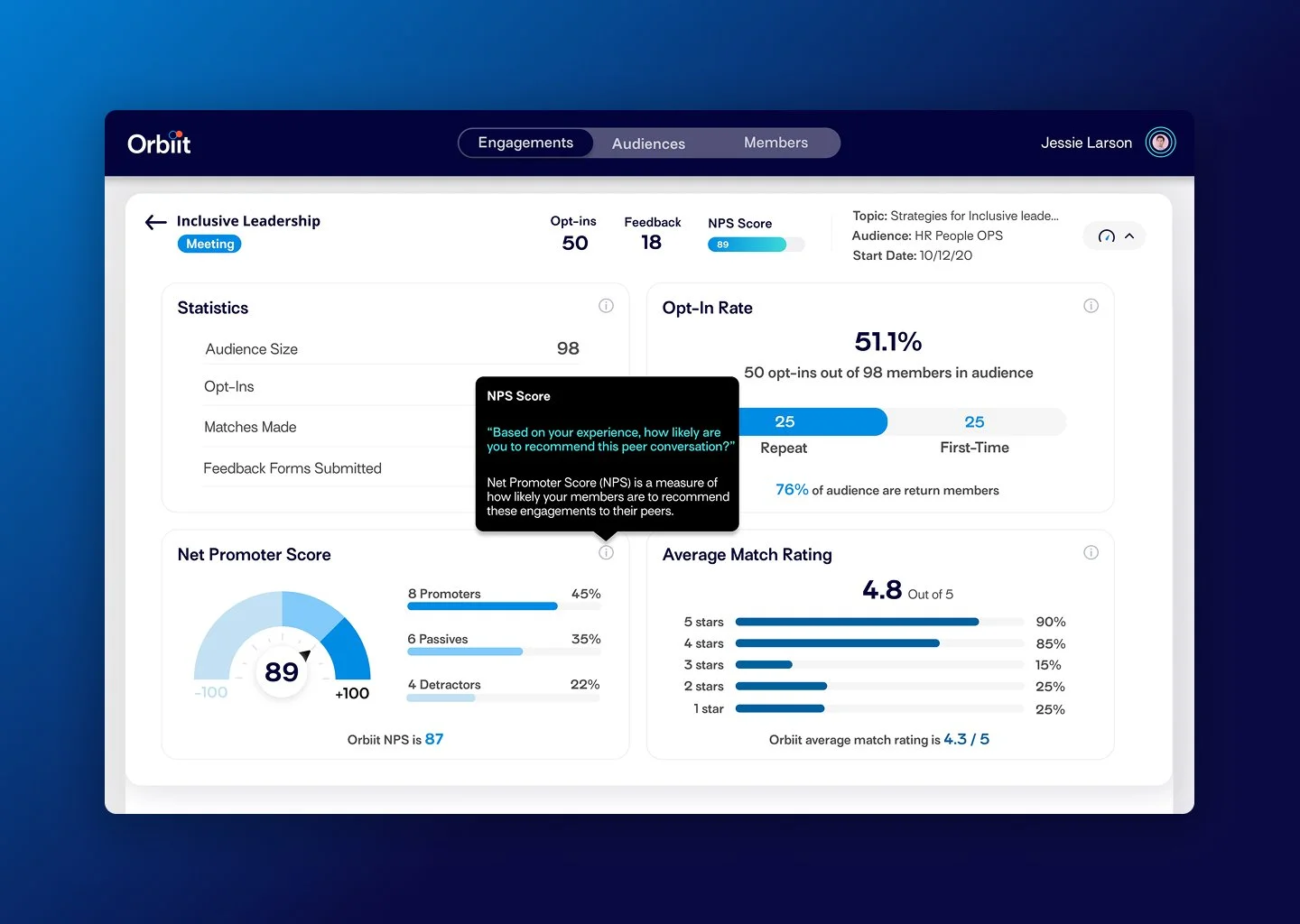
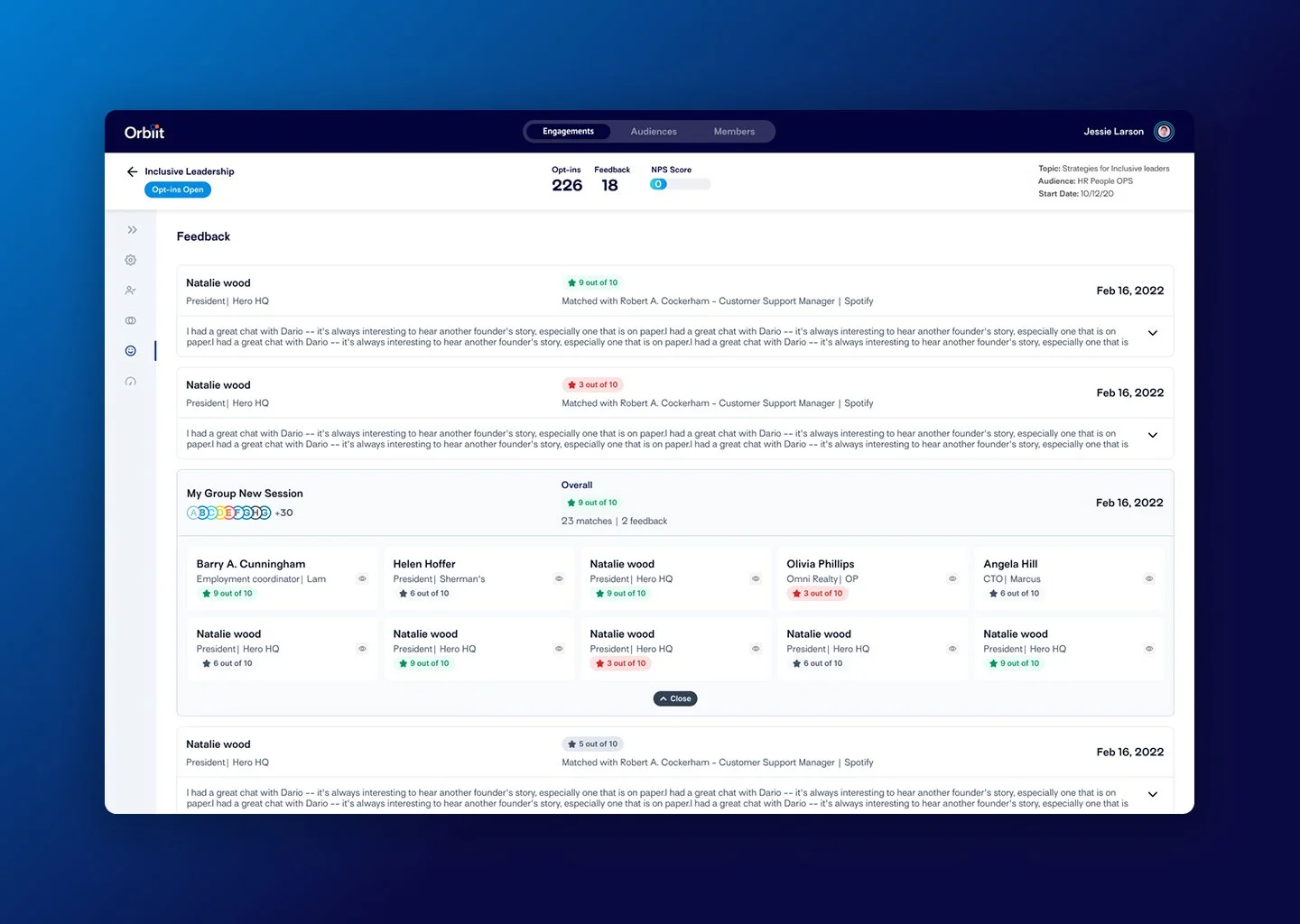
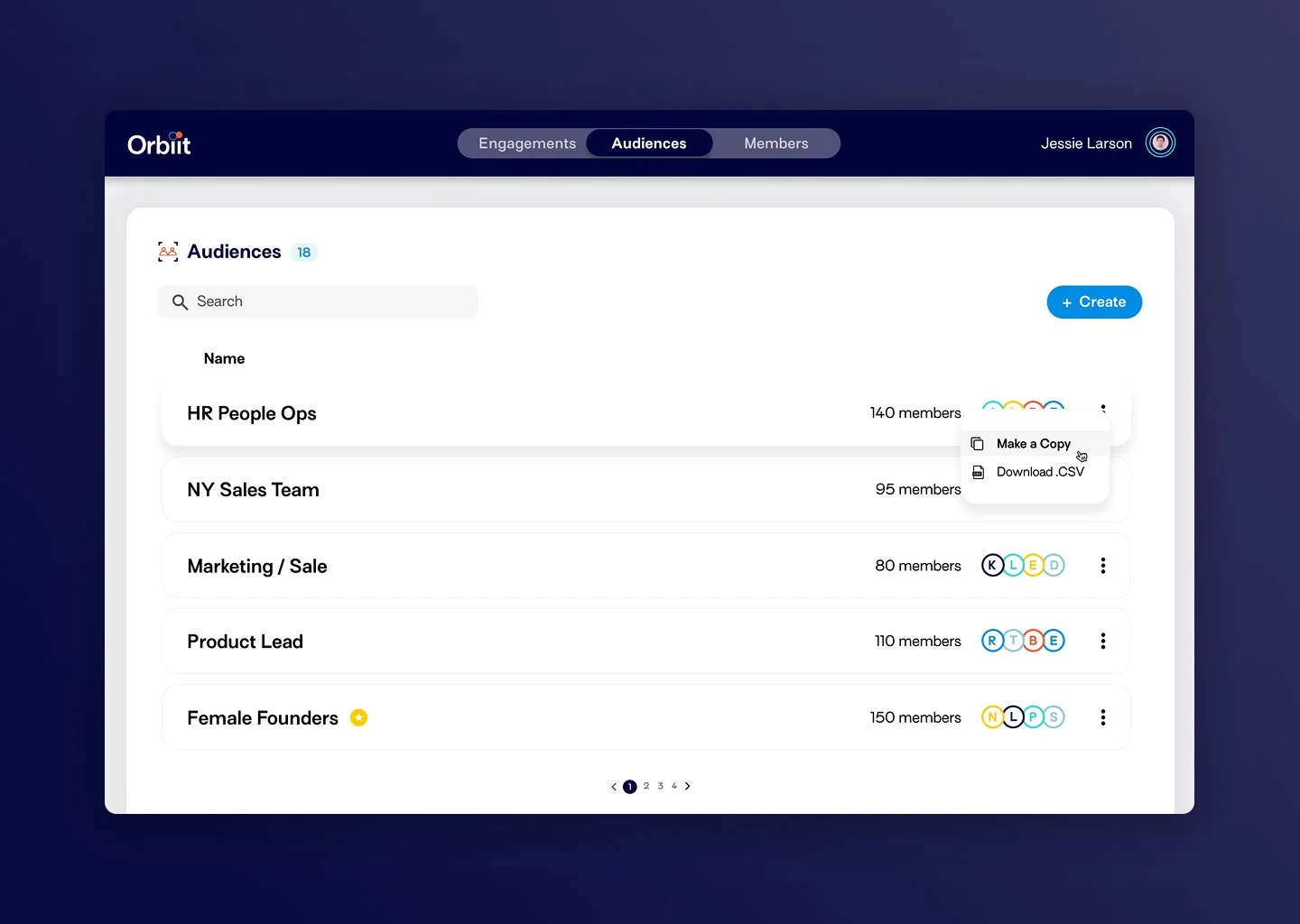
Manual coordination made it difficult to track introductions across emails and spreadsheets. I introduced clear connection-status tracking so Community Managers could see where connections stood and manage the process in one place.
3. Make networking outcomes easier to understand
Community Managers also needed visibility into the performance of their networking programs. Dashboard-level metrics and Net Promoter Score (NPS) visibility brought outcome-related information into the product experience.
Early black-and-white wireframes helped communicate the proposed workflow before visual design was finalized. The feedback supported the direction and reinforced the importance of a clear, structured experience.
Constraints & Leadership
Build for the immediate need without limiting future growth.
As the sole product designer during the first eight months, I had to balance delivery speed, stakeholder expectations, and the complexity of translating AI capabilities into a usable experience.
I focused on establishing modular workflows and a reusable component library that could support the initial product while accommodating future feature development.
Working closely with the founders and product manager, I helped align design decisions with the product's immediate priorities and longer-term direction. This required balancing what the team needed to deliver now with a foundation that could evolve as the product grew.
Results
A more structured way to manage professional connections.
Orbiit brought AI-generated matching into a product experience that helped Community Managers manage introductions, track connection progress, and gain visibility into networking activity.
The redesigned workflows replaced fragmented manual coordination with a more structured process, while giving the team a foundation to expand the product beyond its initial 1:1 matching experience.
User feedback: Community Managers described the experience as intuitive and user-friendly.
Product evolution: The initial matching workflow provided a foundation for expanding into multi-match capabilities.
Company milestone: Orbiit was later acquired by Hivebrite.
Good product design is about structuring decisions, not adding features.
Orbiit reinforced the importance of translating technical capabilities into experiences that solve real user problems. The challenge wasn't simply to expose the AI matching engine through an interface, but to help Community Managers turn matches into meaningful, manageable connections.
The experience also reinforced the value of prioritization: establishing a clear, usable foundation before expanding the product's capabilities.
For me, the key lesson was that successful AI products depend on more than the intelligence behind them. They need thoughtful workflows that help people understand what to do next and act with confidence.