
Orbiit - Designing an AI Networking Platform from Backend Logic to Human Experience
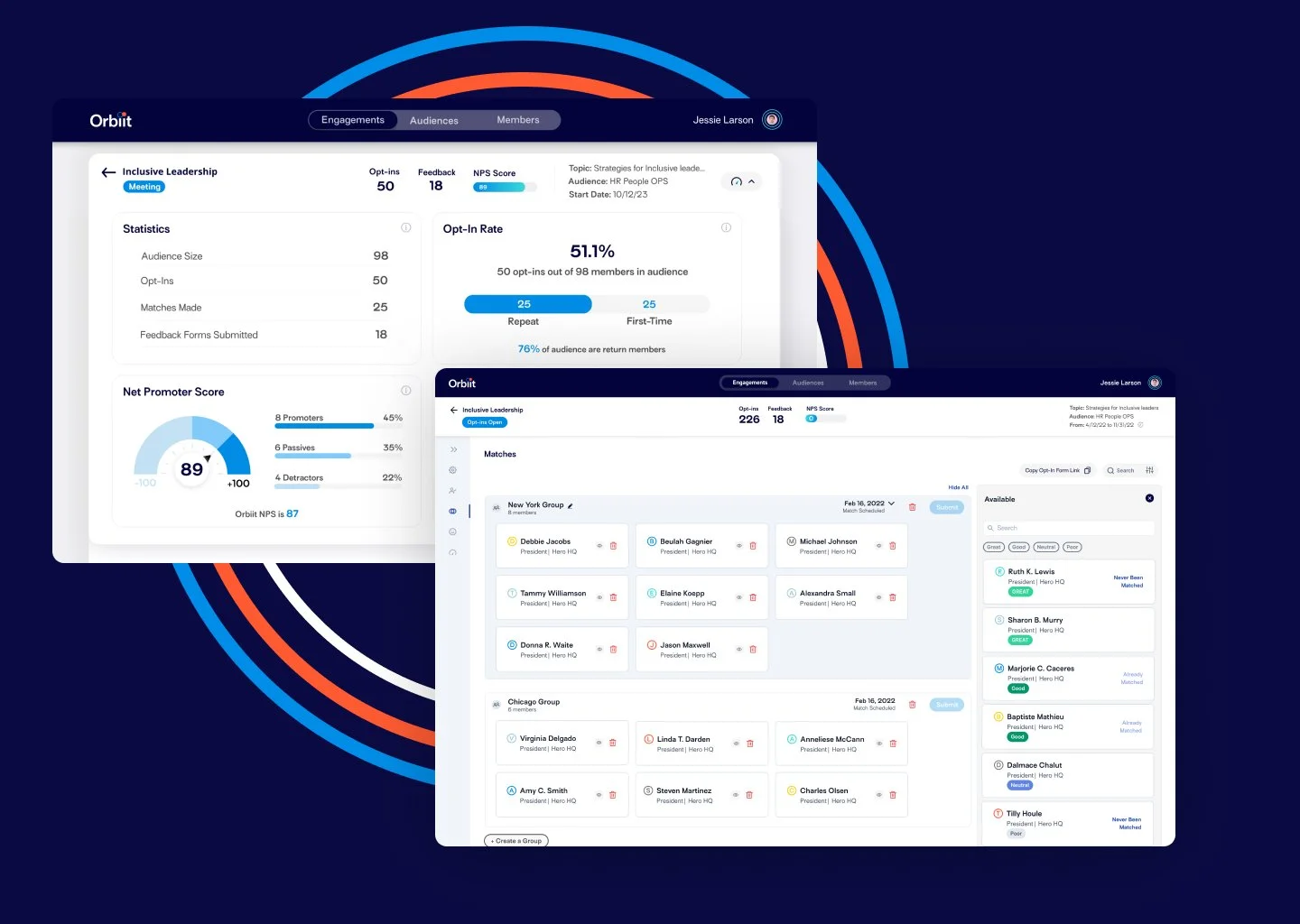
Orbiit is an AI-powered SaaS platform built to help Community Managers create meaningful professional connections at scale. The company had developed a sophisticated backend AI engine, but there was no user experience, no interface structure, and no clear workflow.
My role was to transform a powerful algorithm into a product people could understand, trust, and use daily.
The Core Problem
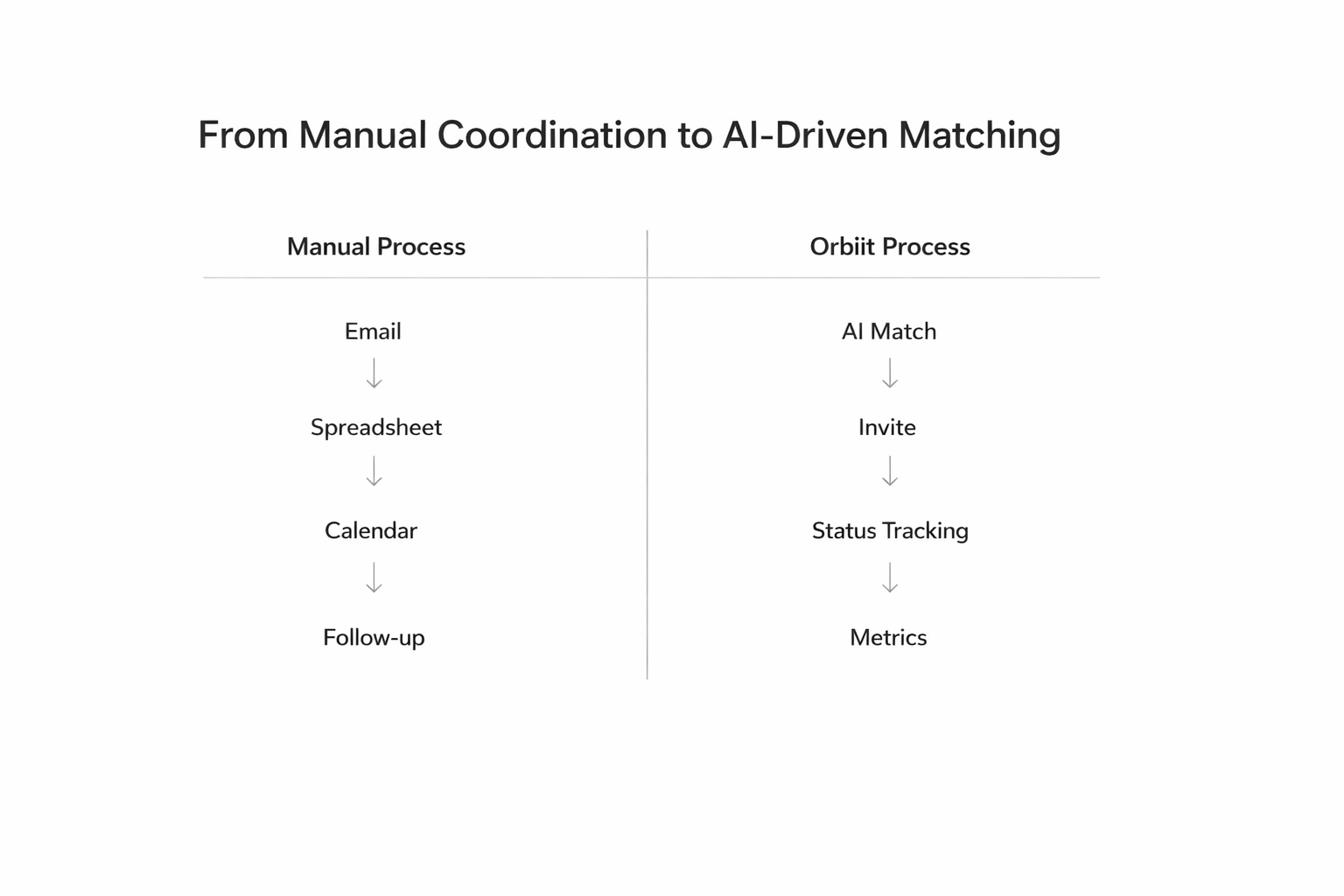
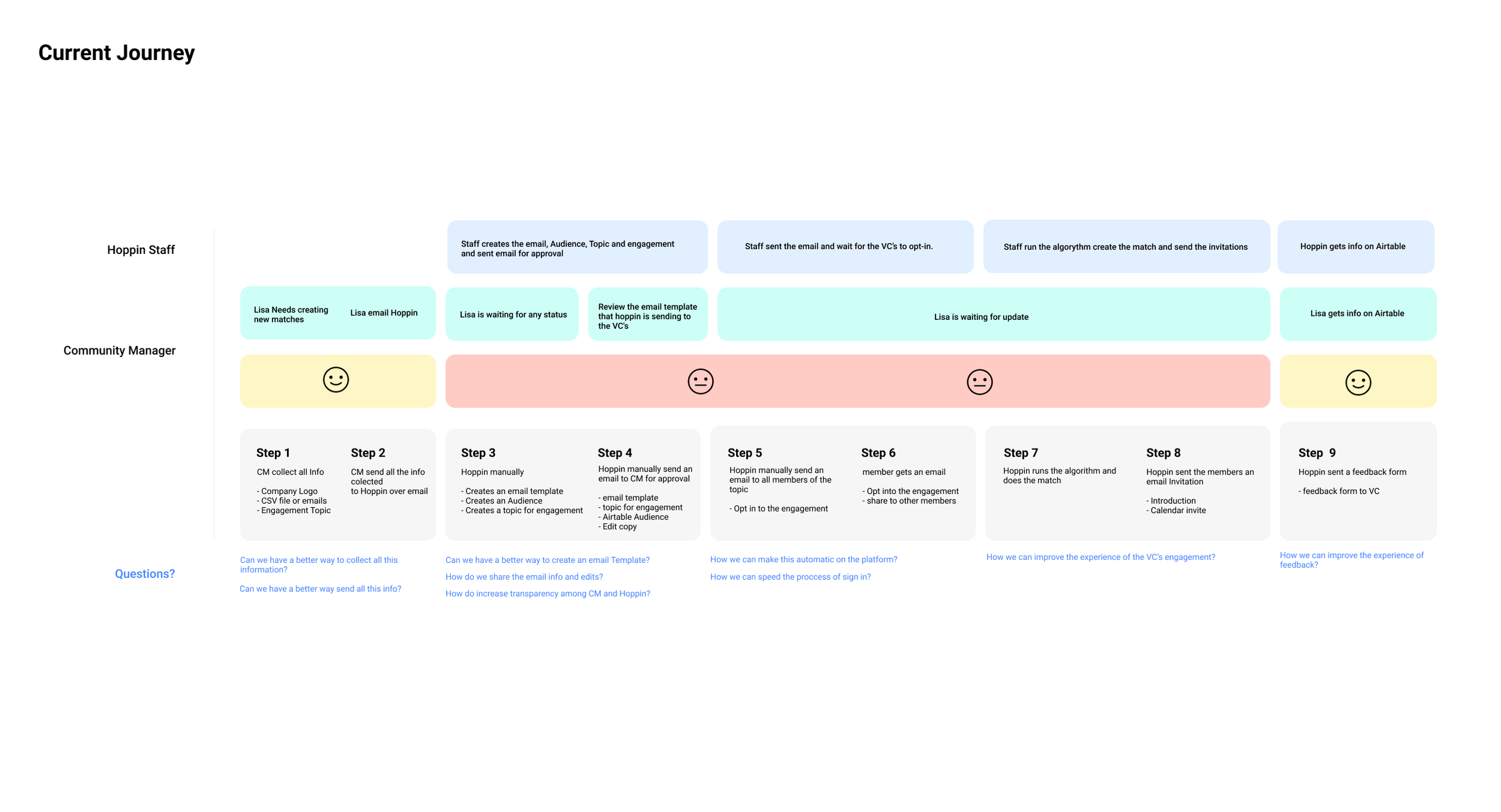
Community Managers were spending hours manually introducing members through email threads, spreadsheets, and calendar coordination. There was no visibility into connection status, no measurable performance tracking, and no scalable workflow.
The AI could generate matches but there was no system that supported the real-world responsibilities of a Community Manager.
The product needed structure, clarity, and prioritization.

My Role
As Senior UX Designer, I owned the experience end-to-end for the first eight months.
Sole product designer at launch
Partnered directly with founders and one PM
Led and mentored 3 junior designers in Spain
Defined the MVP scope and roadmap
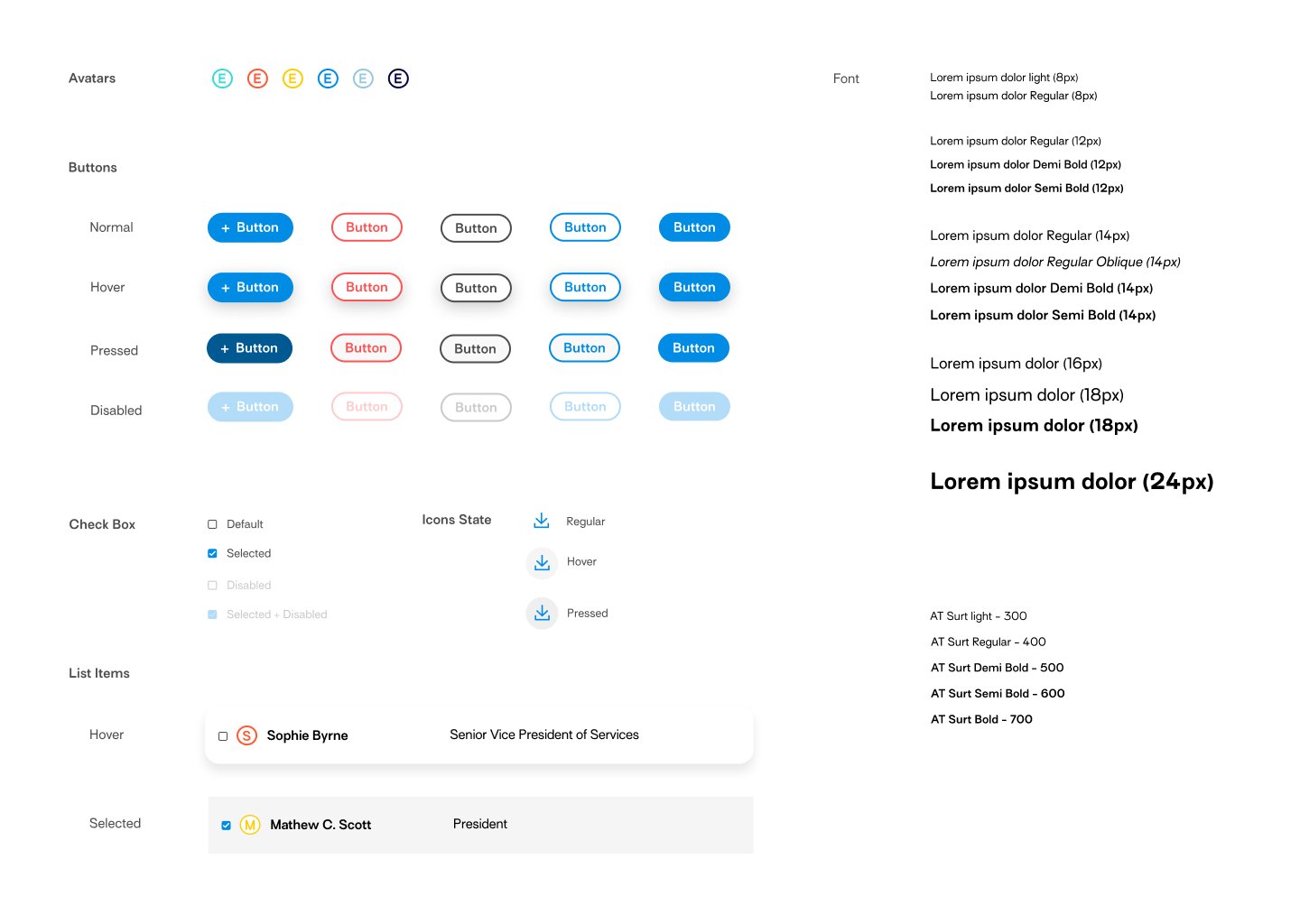
Designed the full UI system and interaction model
Built a scalable component library
Every interaction, flow, and visual decision passed through my direction.
Understanding the User
Before designing screens, I focused on understanding daily workflows.
Through interviews with both junior and senior Community Managers, I uncovered two clear patterns:
Some users needed speed — they wanted to complete tasks efficiently and move on.
Others needed data — they wanted reporting, metrics, and measurable impact.
The common denominator was time pressure. Most Community Managers were also managing events, social media, and member communications. Networking became an additional burden rather than a strategic tool.
That insight shaped everything.
Strategic Prioritization
Stakeholders initially wanted to ship multiple advanced features at once. However, without user validation, that would have introduced unnecessary complexity.
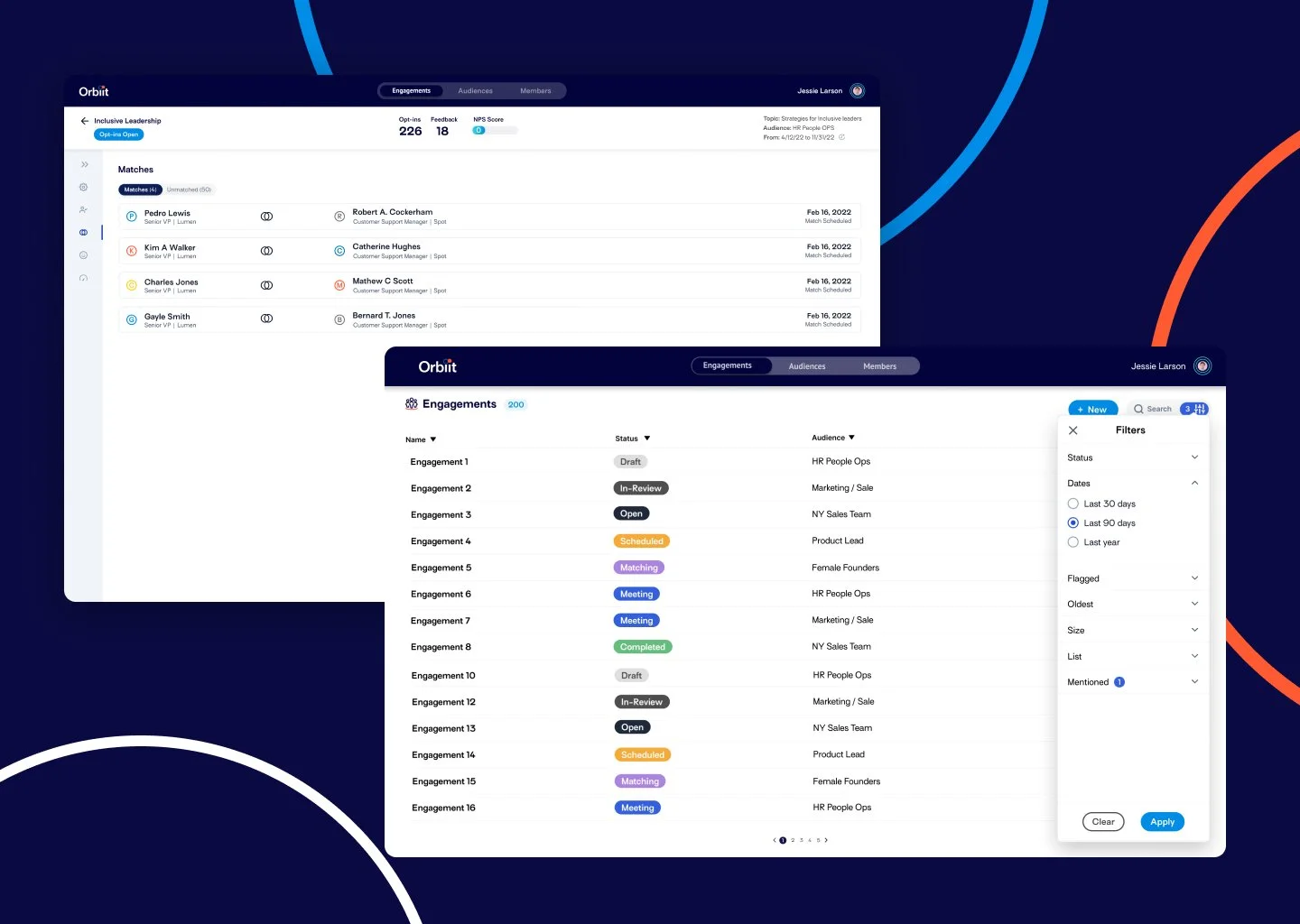
I conducted focused interviews and identified five core features that would immediately transform workflows. The most critical was the ability to send structured AI-powered invites.
Instead of designing everything, we designed what would change behavior first.
We launched with 1:1 matching as the beta foundation. Adoption was immediate. Feedback was clear. The workflow made sense.
Only after validation did we expand into multi-match capabilities.
Designing the Experience
The challenge was not the AI itself — it was trust and clarity.
Users needed to understand:
Why a match was made
What stage the connection was in
How to take the next action
I structured the product around visibility and control.
Manual email introductions were replaced with:
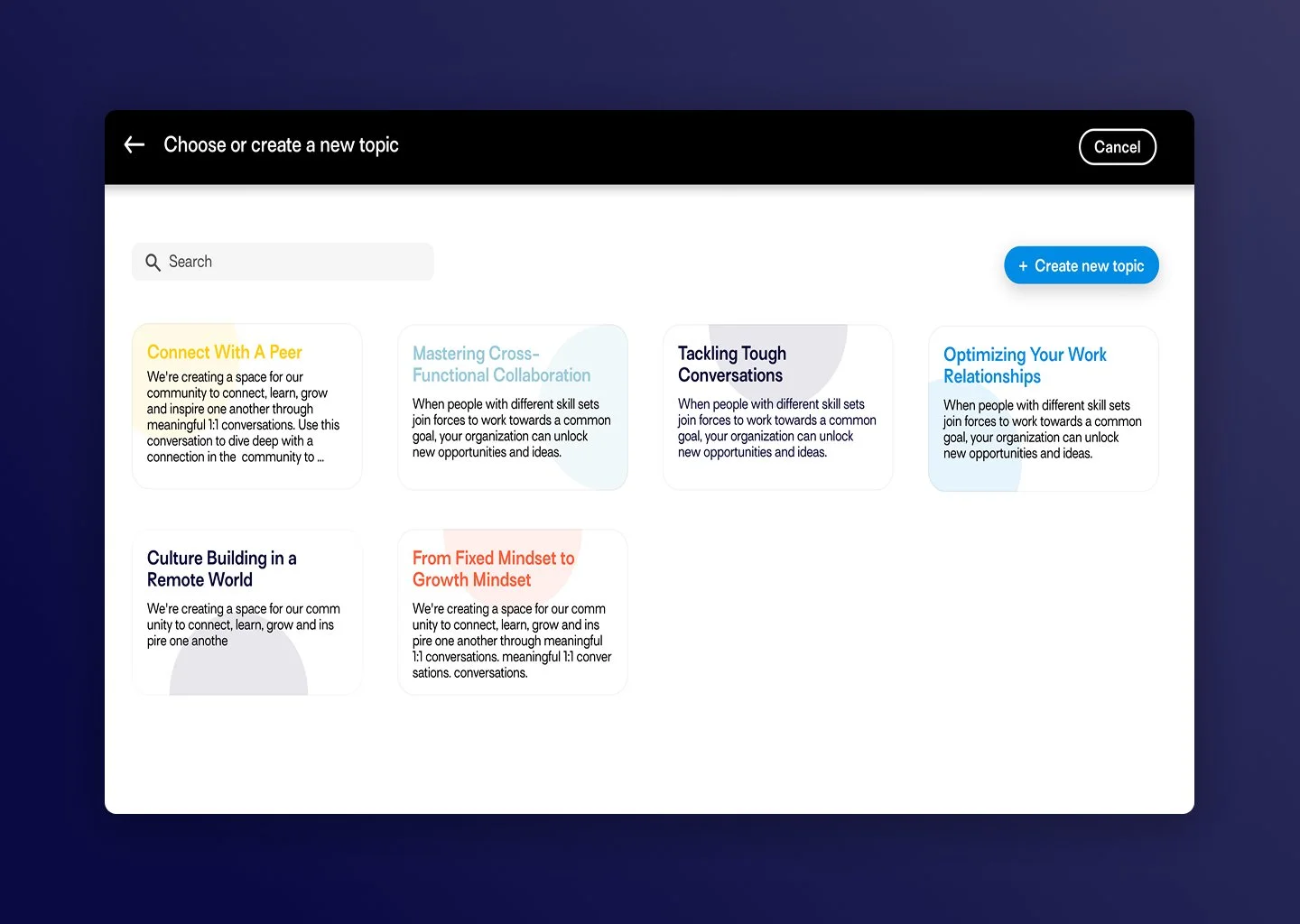
AI-generated matches
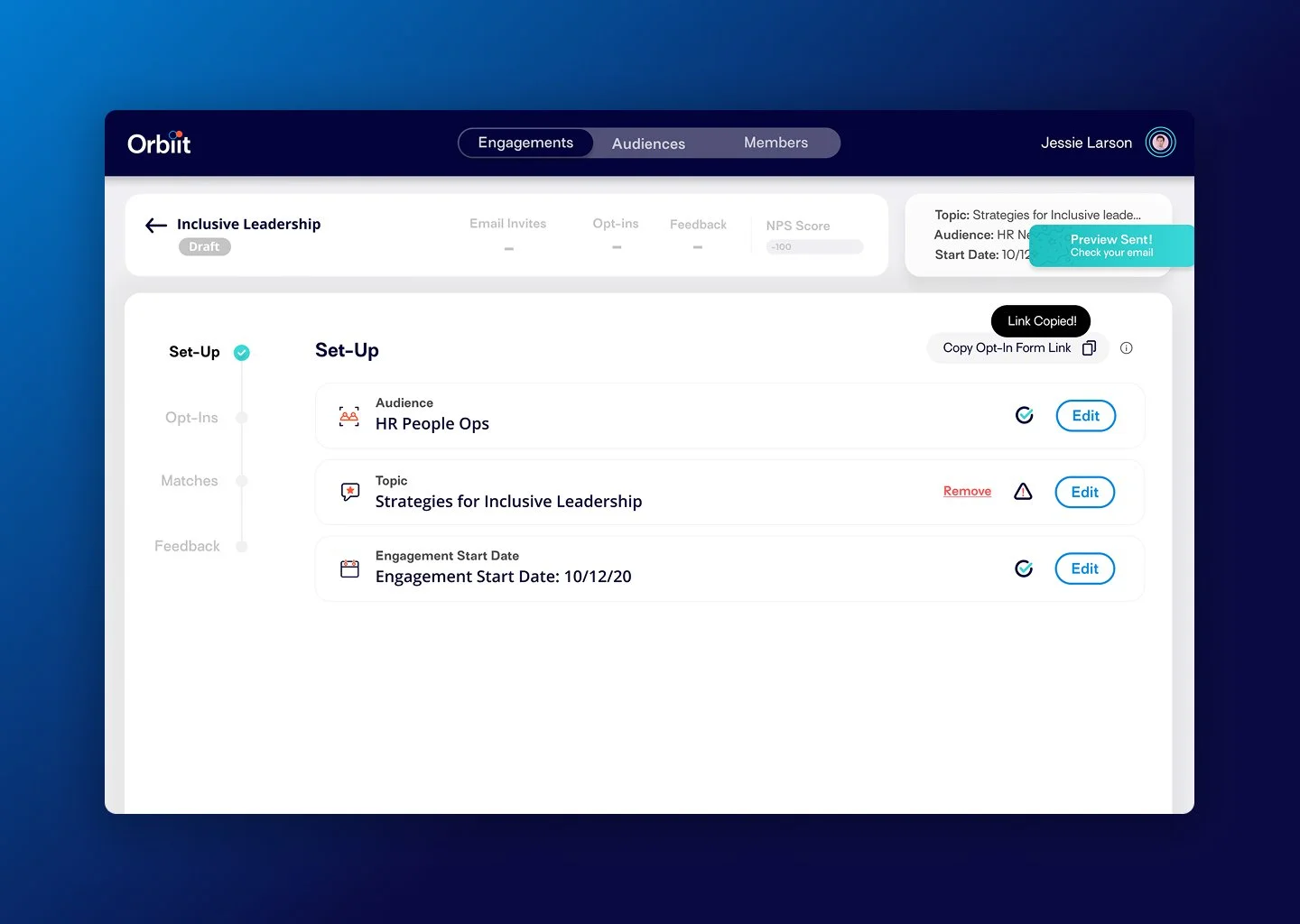
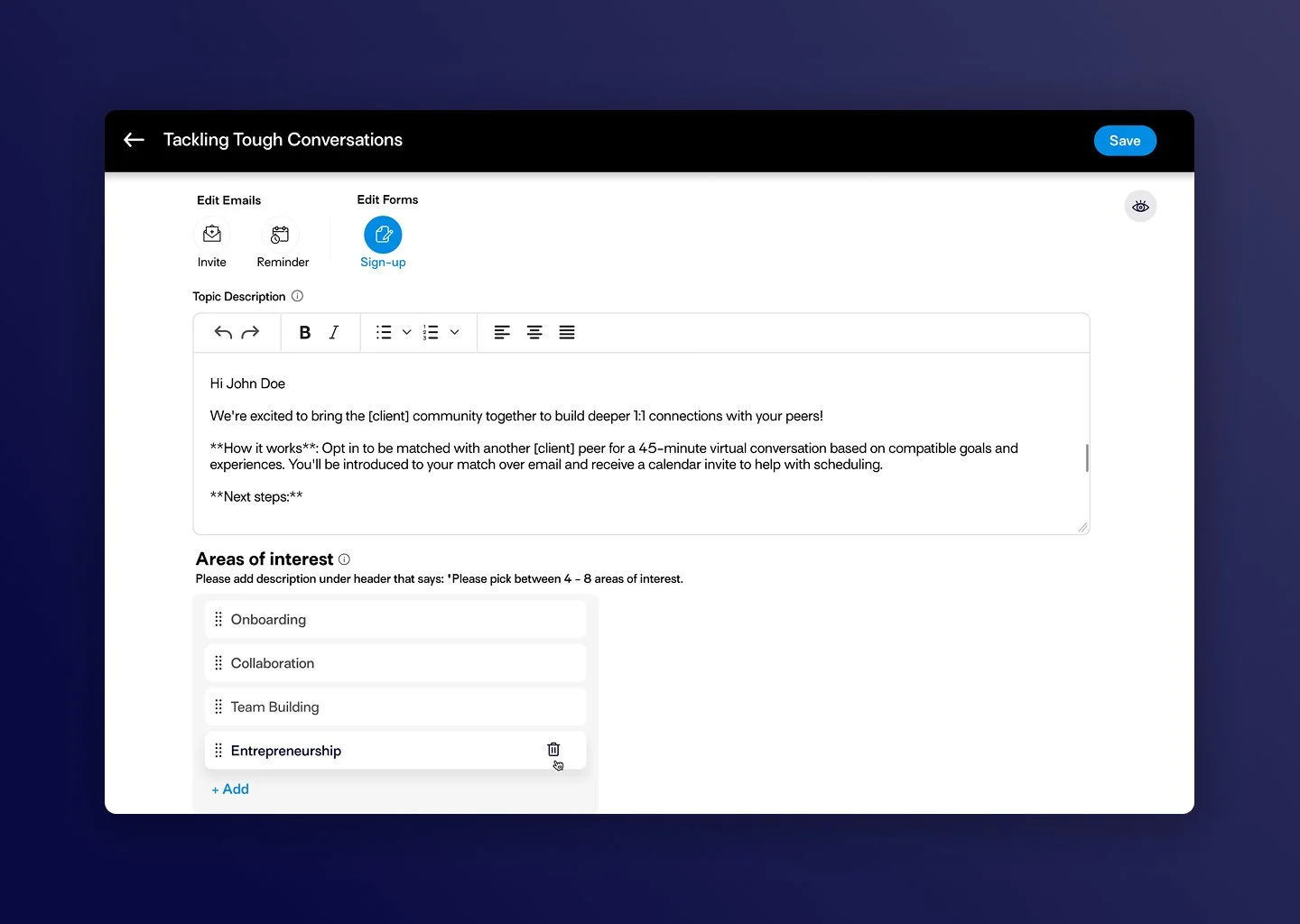
Structured invite flows
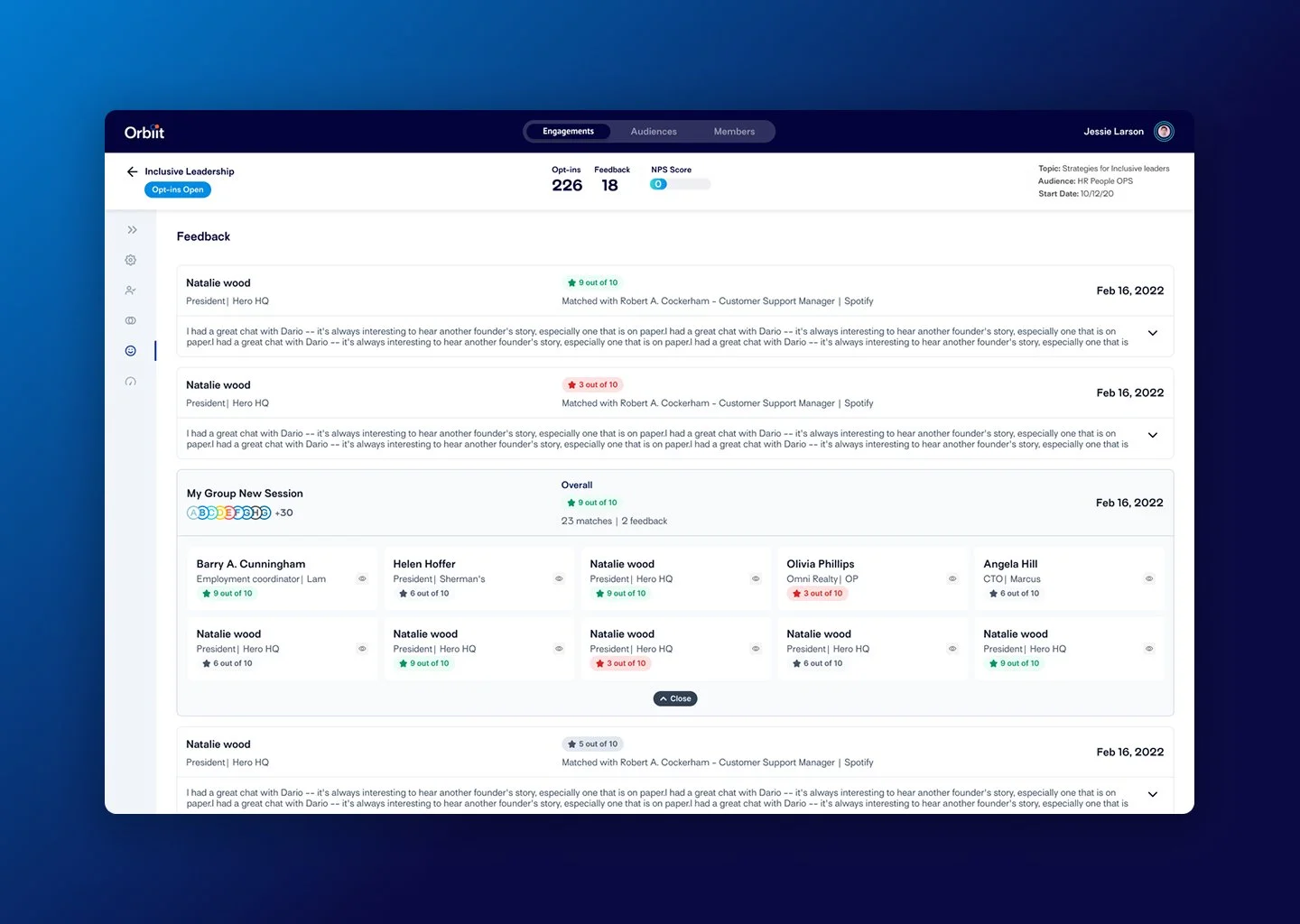
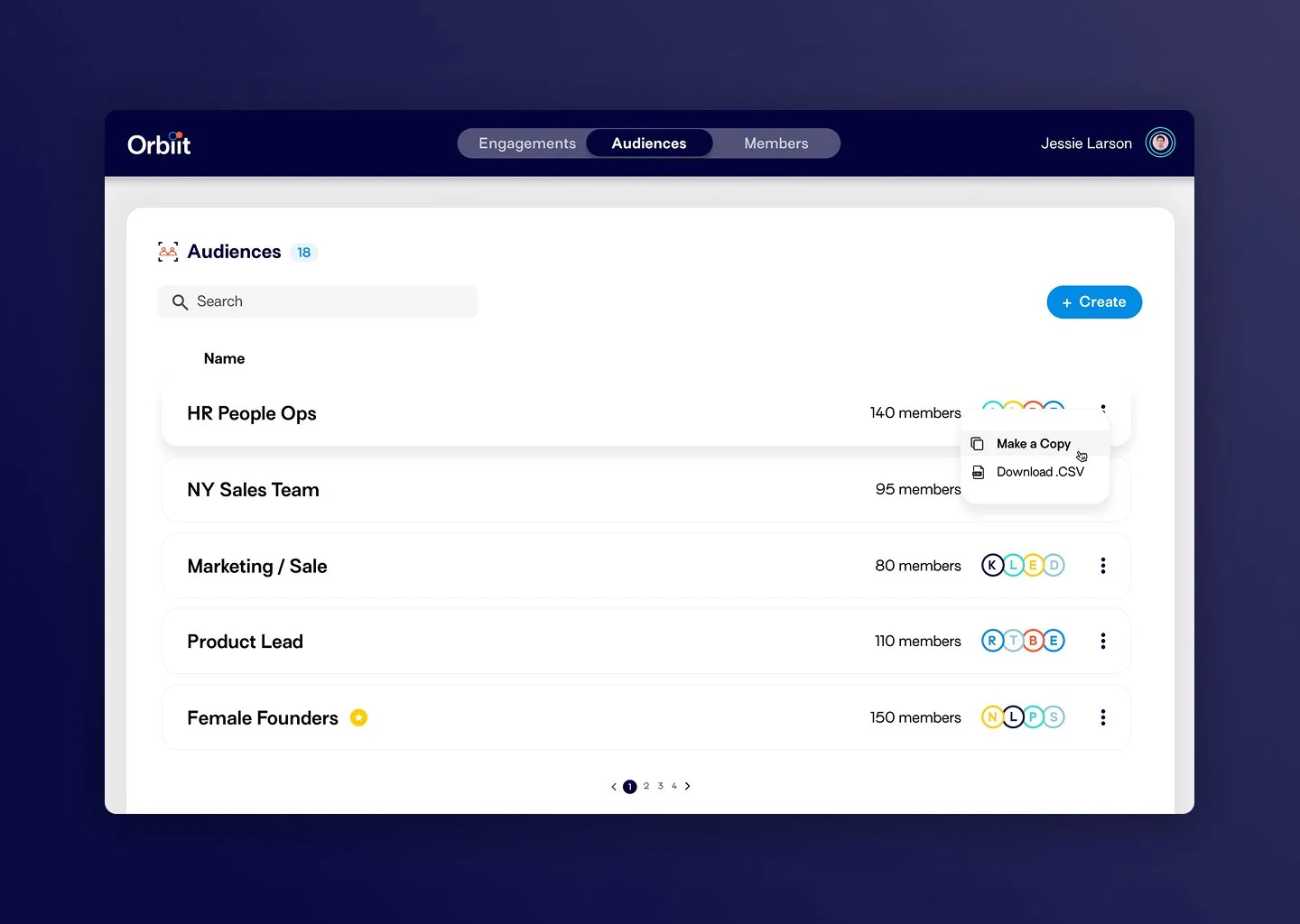
Clear connection status tracking
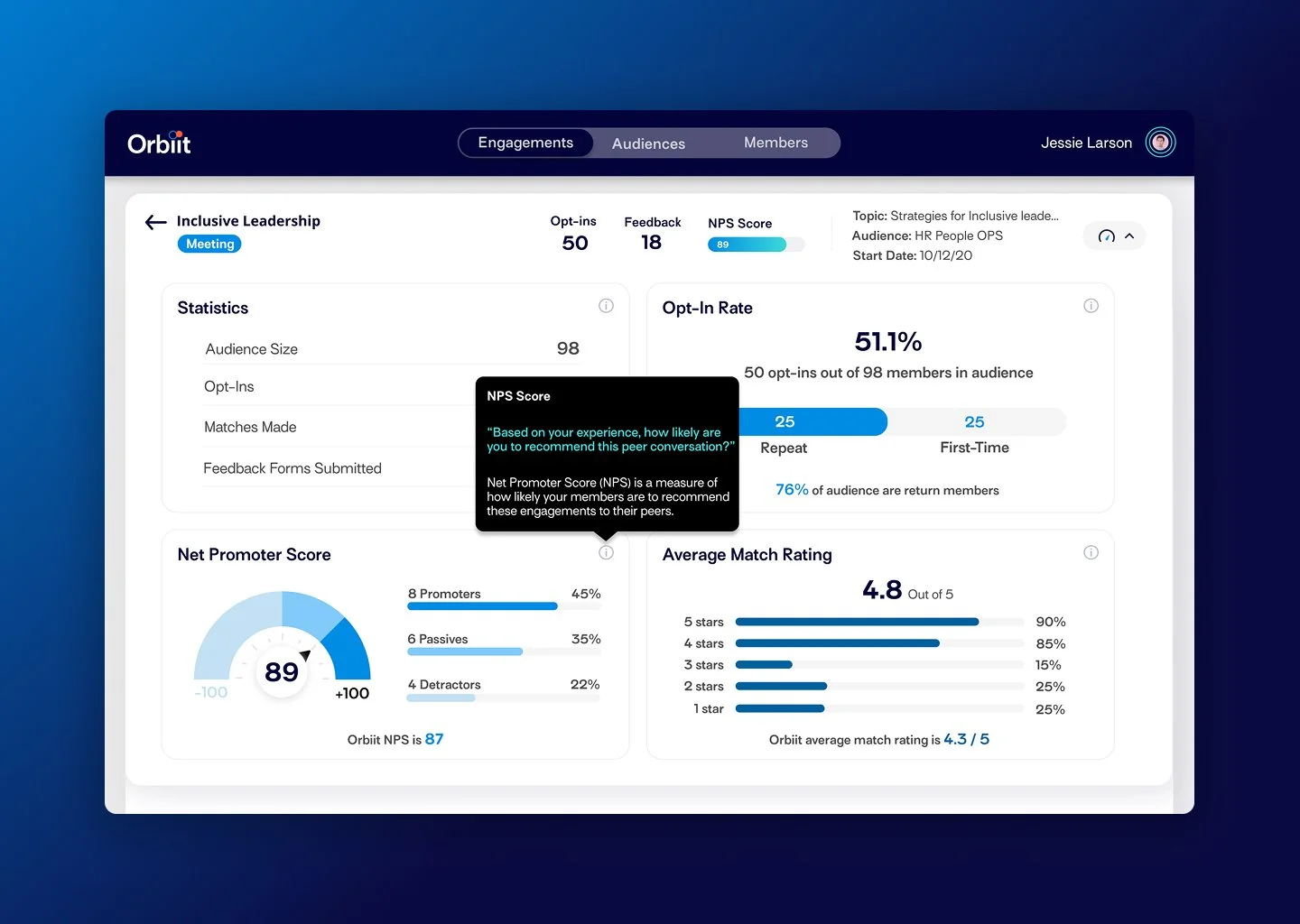
Dashboard-level performance metrics
Net Promoter Score visibility
The interface reduced cognitive load while surfacing meaningful data.
Early black-and-white wireframes were powerful enough that users immediately understood the value. That validation reinforced the direction.
Constraints & Leadership
Being the only designer for the first eight months required strong prioritization.
The constraints were:
Limited design bandwidth
High stakeholder expectations
Complex AI capabilities that could overwhelm users
I focused on modular architecture and future-proofed the system for upcoming quarterly features.
Convincing stakeholders to phase delivery rather than release everything at once was one of the most important strategic decisions of the project.
Results
The platform achieved an 80–90% feature acceptance rate after launch.
Community Managers consistently described the experience as intuitive and user-friendly. The workflow reduced manual effort and provided measurable insight into networking performance.
The product’s usability, clarity, and structured experience contributed to its acquisition by Hivebrite.
What This Project Changed for Me
This project reinforced that small workflow improvements can create massive impact. It also strengthened my ability to balance AI complexity with human-centered clarity. Users often cannot articulate their friction until they see a better alternative. Design is not about adding features. It is about structuring decisions.